LVMH Watch Week 2026: Cutting Through the Hype
Zenith Defy Revival A3643
With LVMH Watch Week now firmly in the rearview mirror and Watches and Wonders yeah to materialize in the headlights, it feels like the right moment to take stock of what just happened. Clear of the initial wave of launch-day rhetoric and algorithm-friendly headlines, there’s finally room to digest which releases might carry lasting weight — and which were simply built for the moment.
There’s no denying that LVMH Watch Week continues to grow in both scale and significance. Each year, more attention is heaped onto the first major show out of the gates, strategically flattening what used to be a single, overwhelming peak of coverage in April. This time around, what stood out most wasn’t just the volume of releases, but the depth — particularly from brands deeper within the group’s portfolio, signaling a more intentional approach to high-level watchmaking beyond the usual headline-makers.
As is often the case, Zenith and TAG Heuer led both in terms of sheer output and share of attention, at times overshadowing the higher watchmaking on display from Louis Vuitton, Tiffany & Co., Gérald Genta, and Daniel Roth. Whether that’s a byproduct of numbers or simply the reality that short-form content favors simpler stories, those brands largely remained on the periphery of the conversation. Hublot, however, managed to capture a different slice of the audience entirely, leaning into its role as both technical showpiece and cultural lightning rod. And then there was Bvlgari, quietly leaving the Octo behind in favor of stylized substance.
With that lens in mind — cutting past the headlines and into what actually feels lasting — here’s how the week shook out, brand by brand.
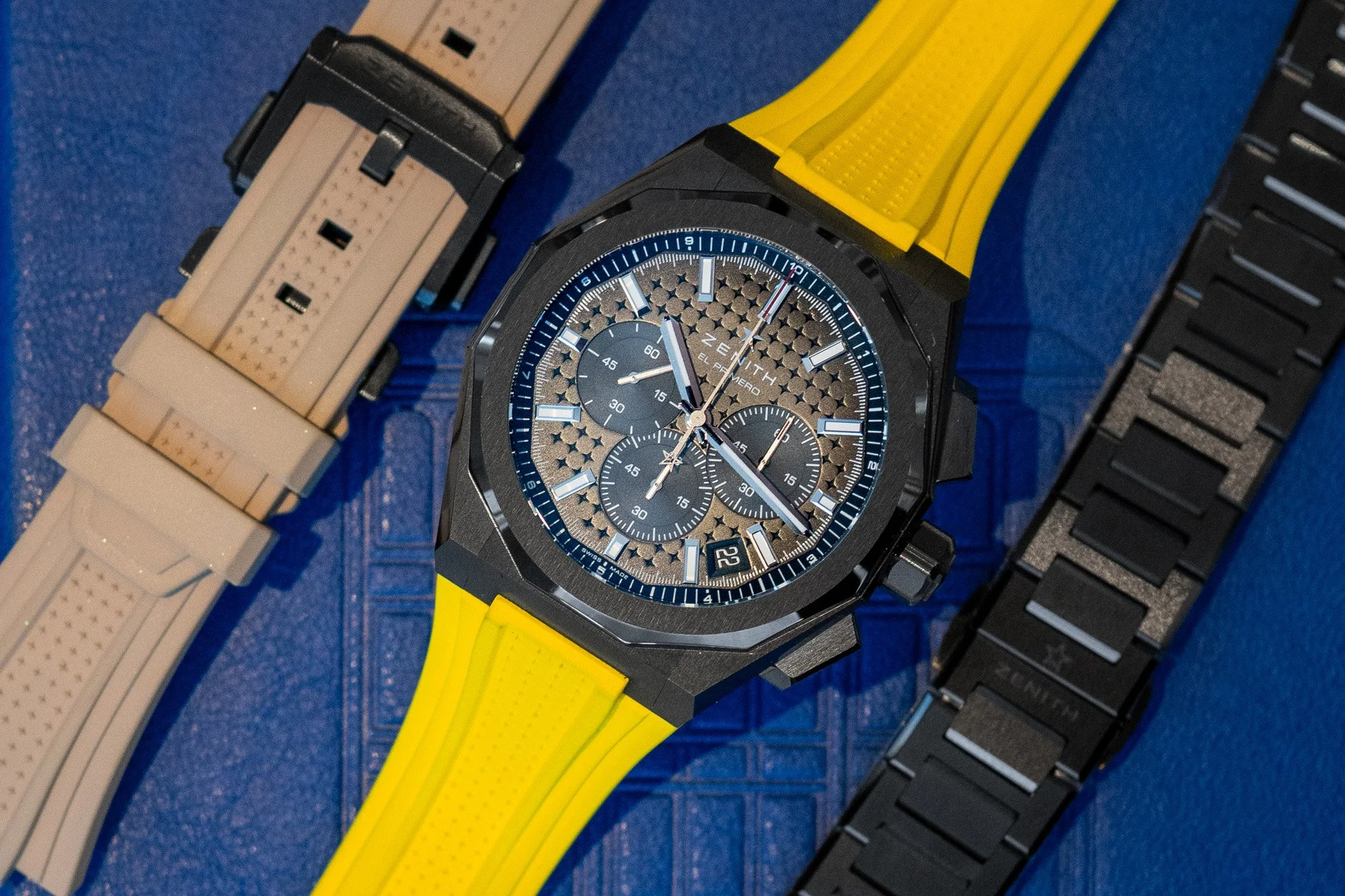
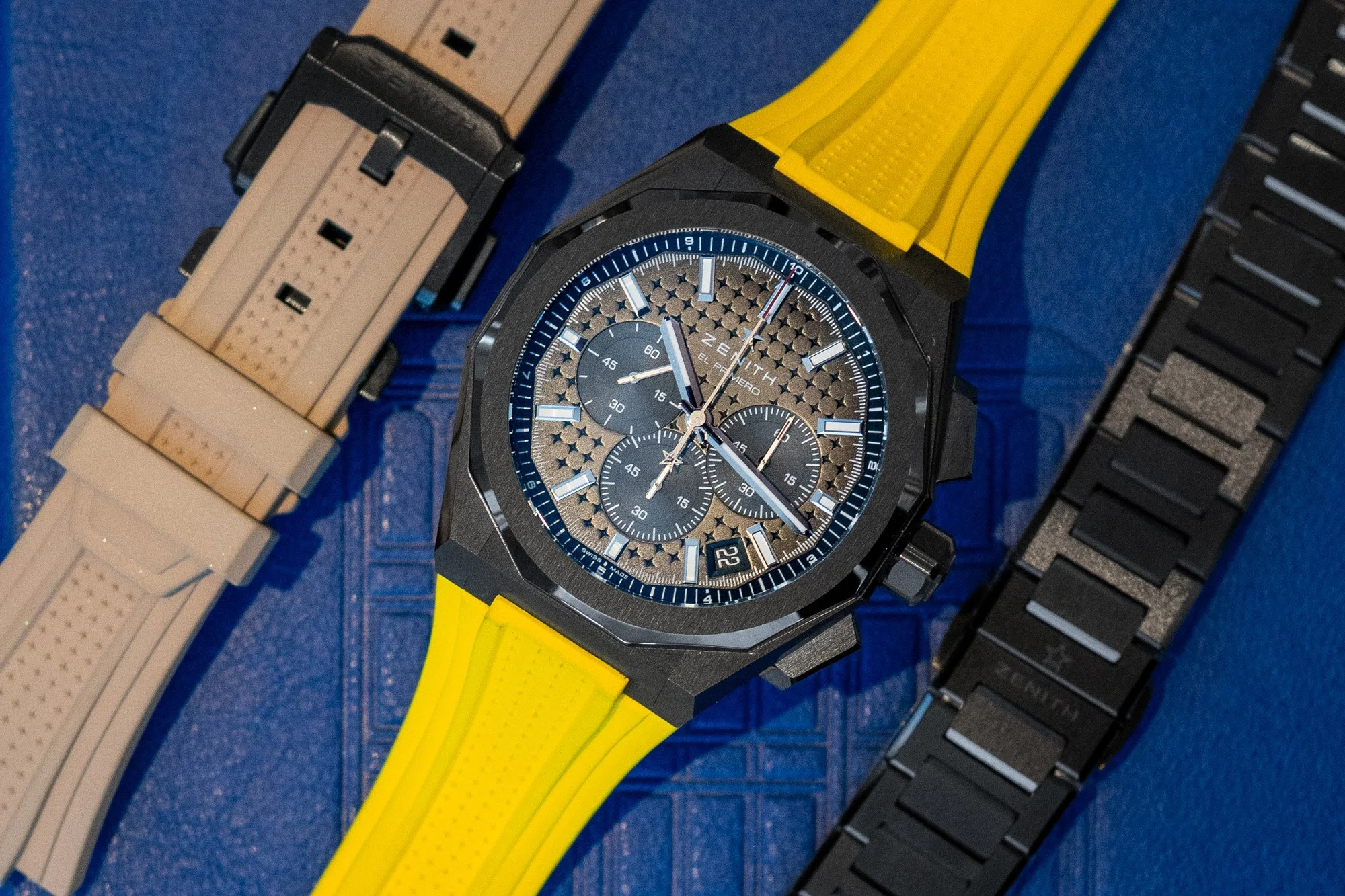
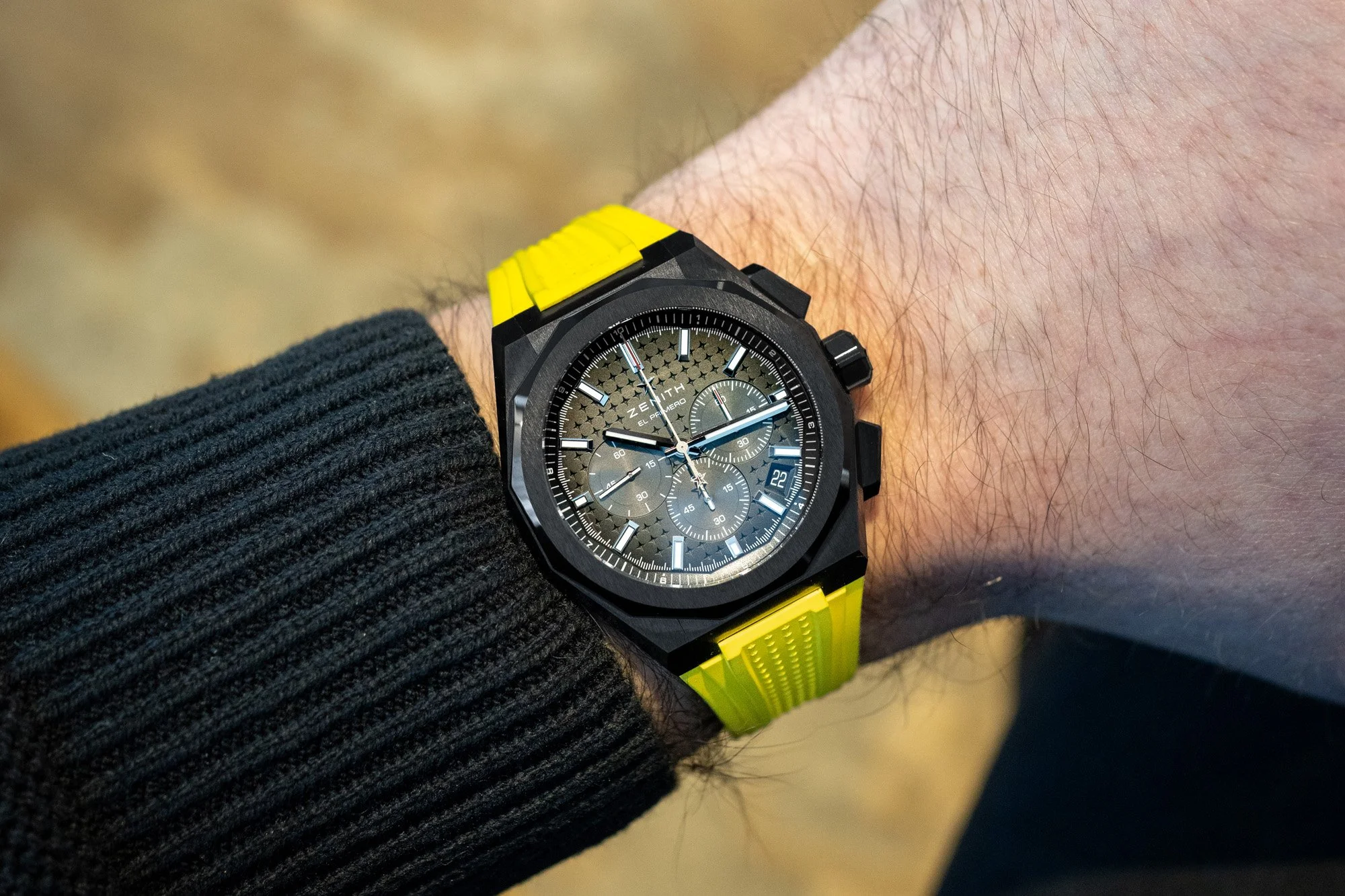
Zenith Defy Skyline Chronograph on yellow quick-change rubber
Zenith
Safe expansion, bold nostalgia, and one genuinely charming outlier.
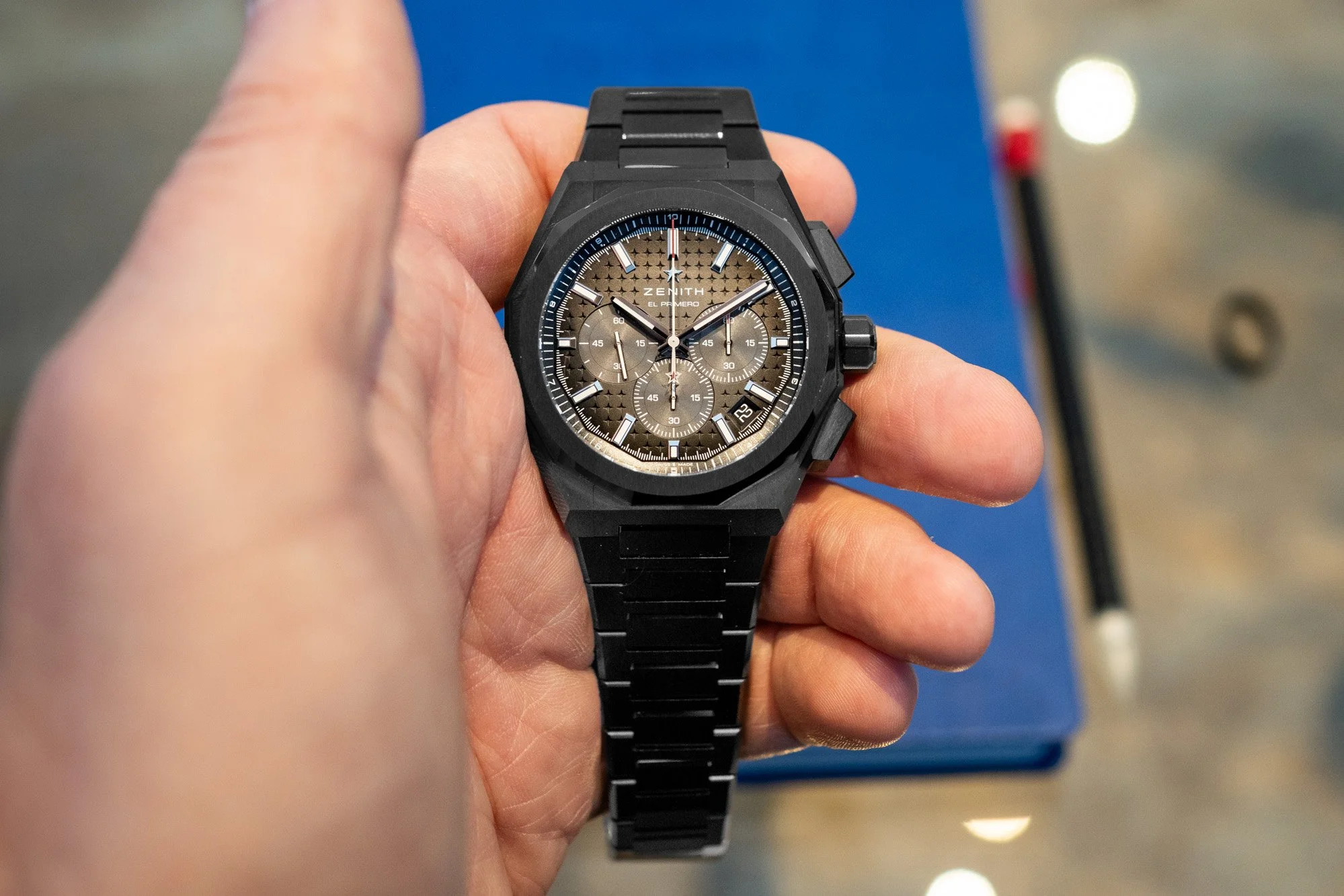
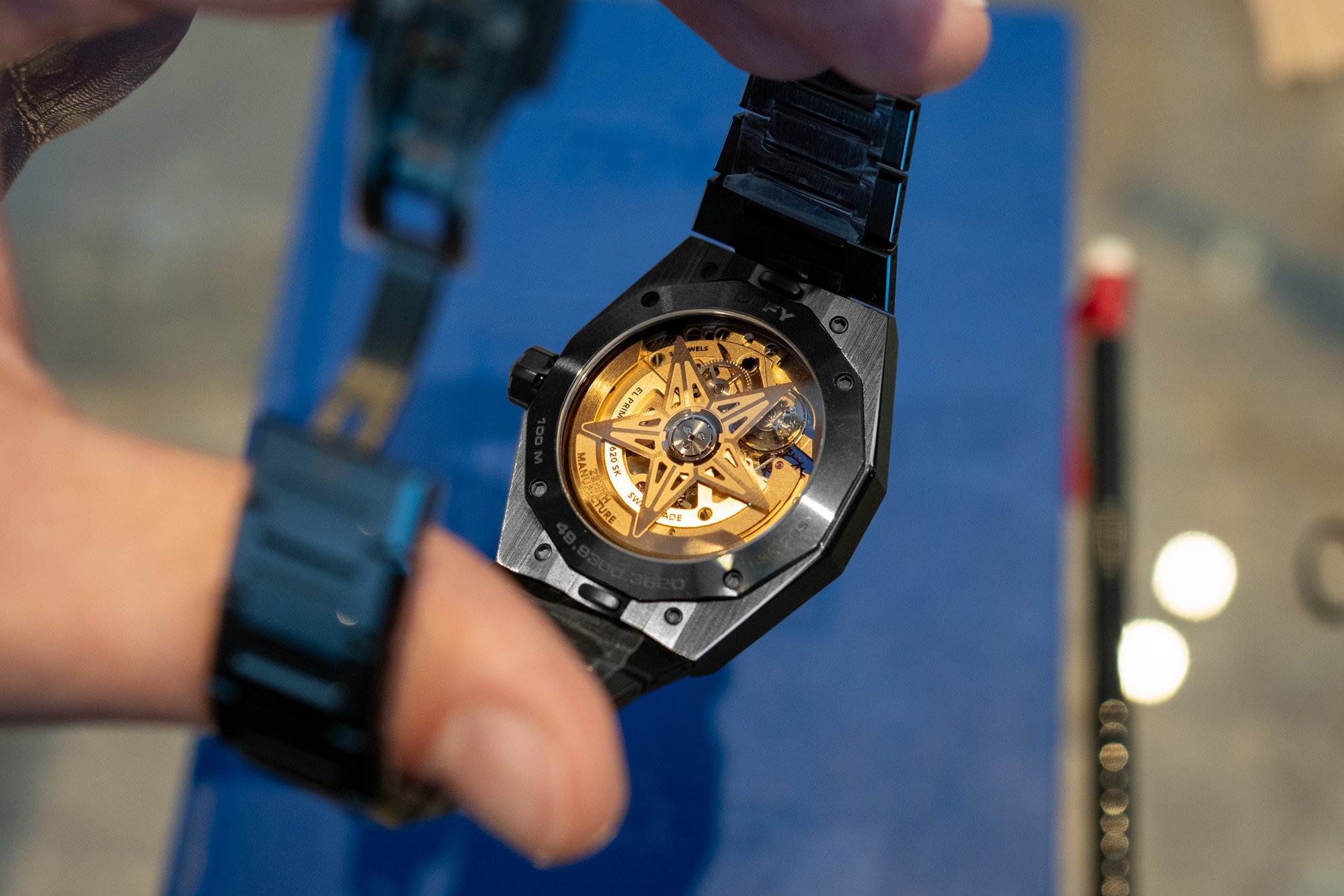
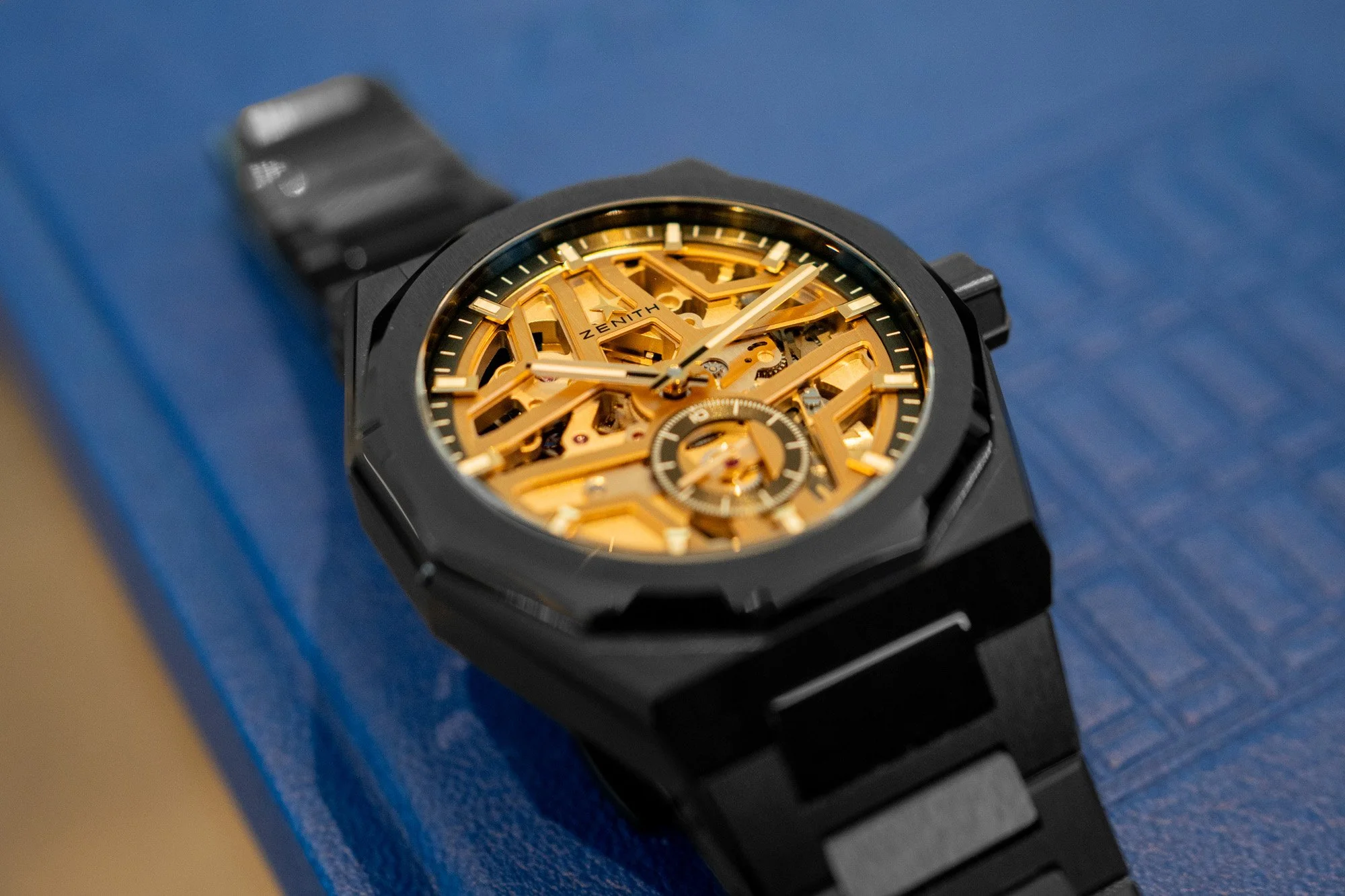
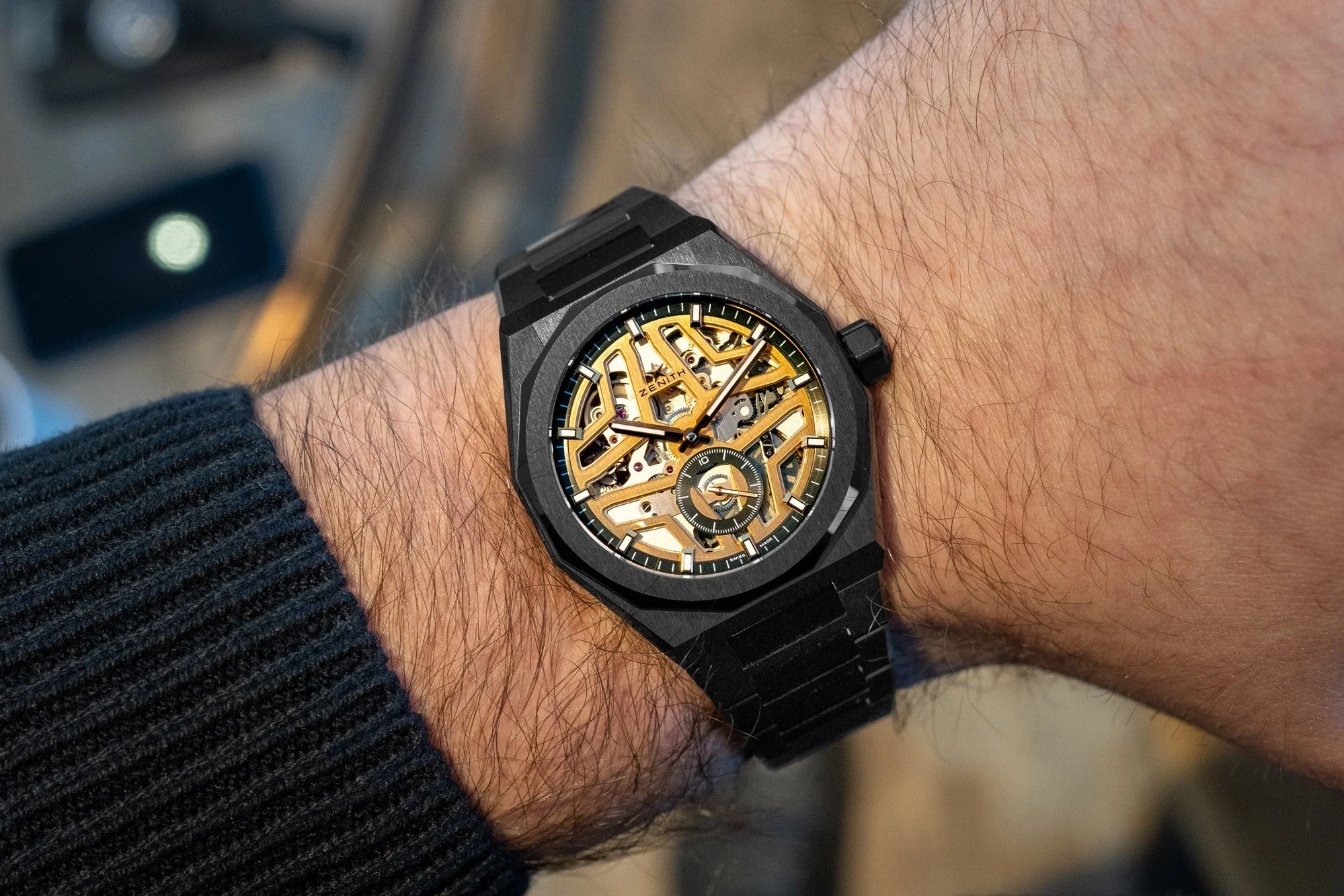
Zenith played things relatively safe this year, focusing on a broad expansion of the Defy Skyline collection through visual and material upgrades rather than radical departures. Color — or the deliberate absence of it — became a recurring theme. Muted black ceramic, black ceramic paired with warm rose gold, full gold accented by deep navy, and a quick-change system showcasing a range of vibrant rubber straps all pointed to a strategy built around refinement through variation.
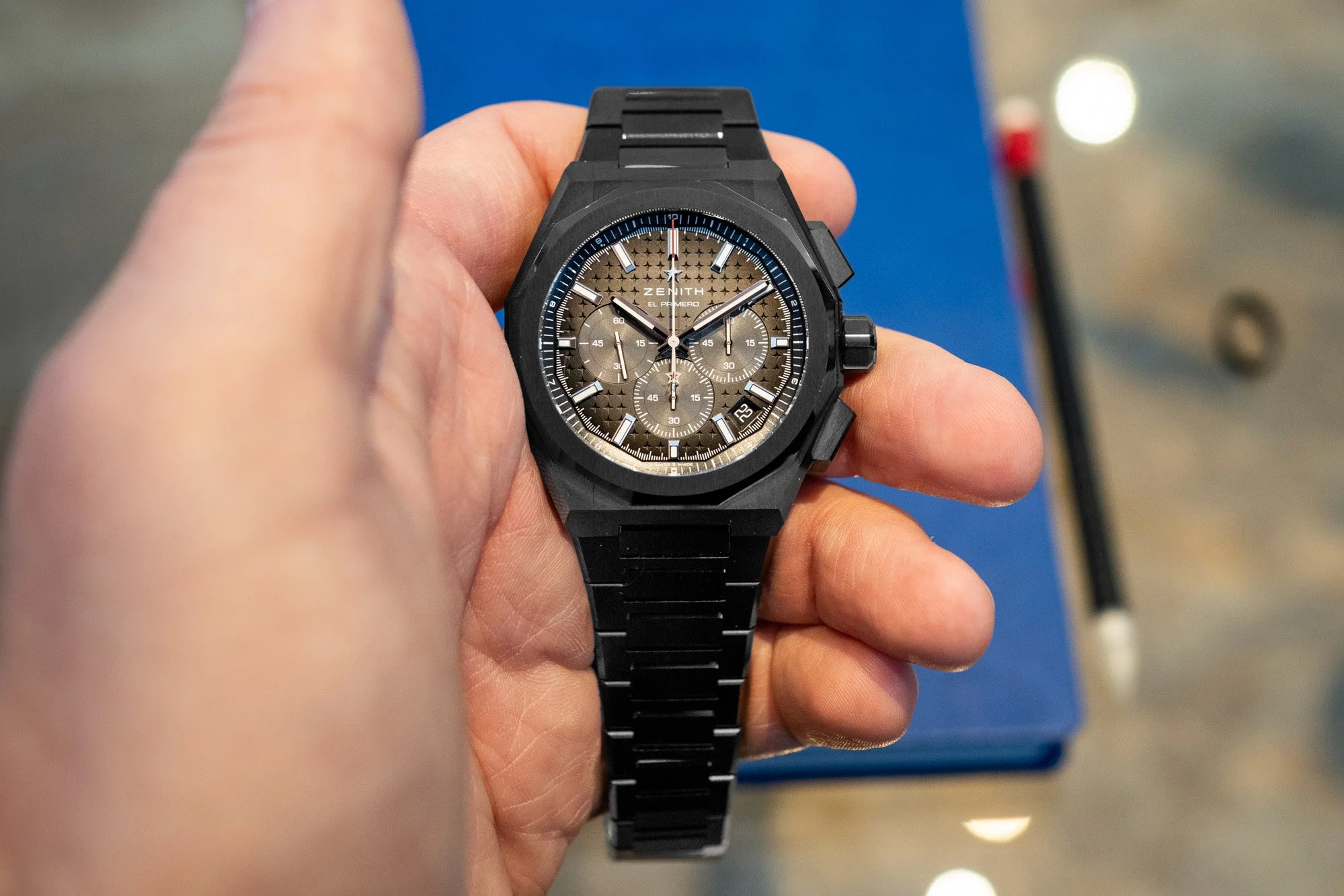
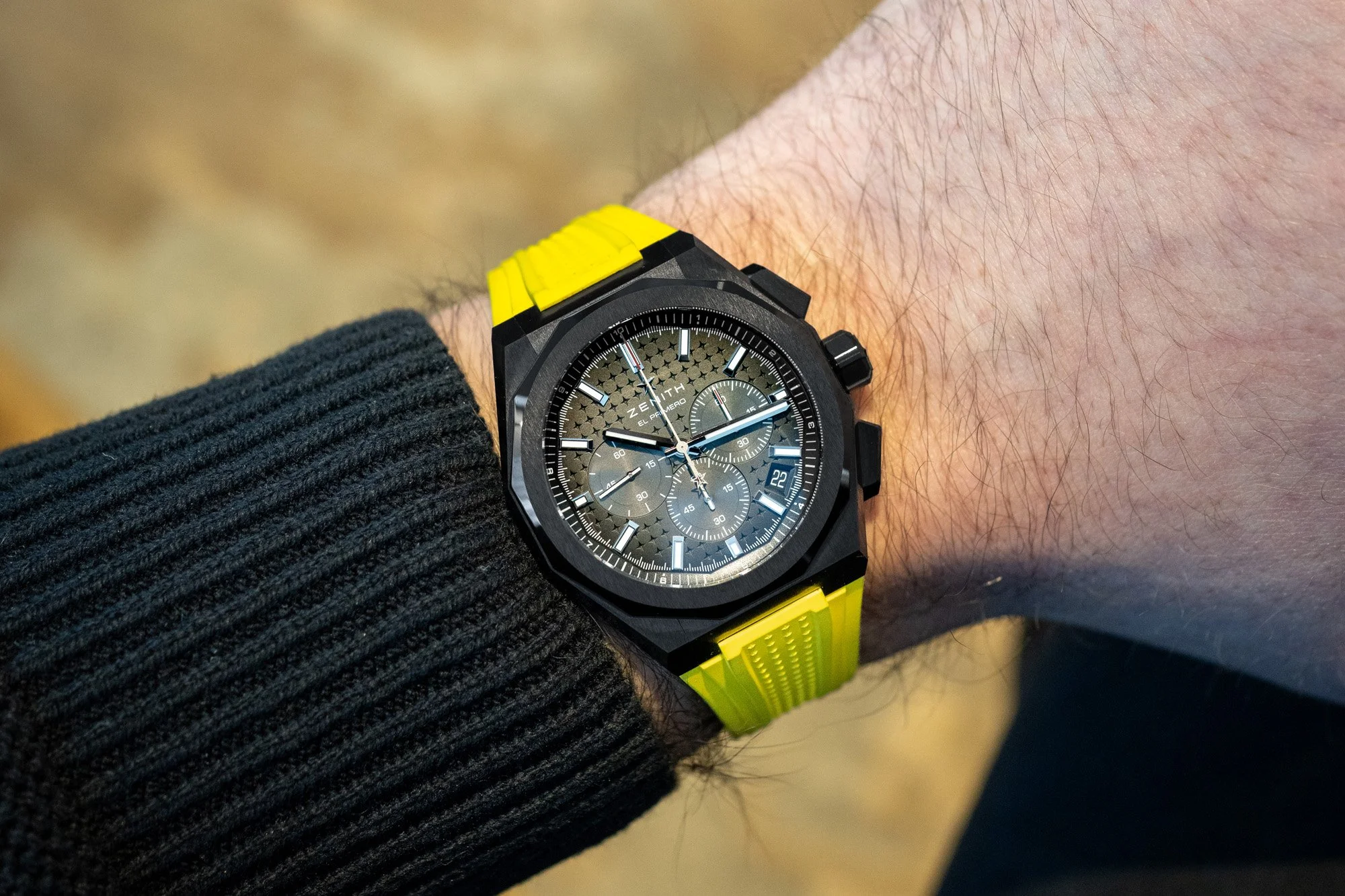
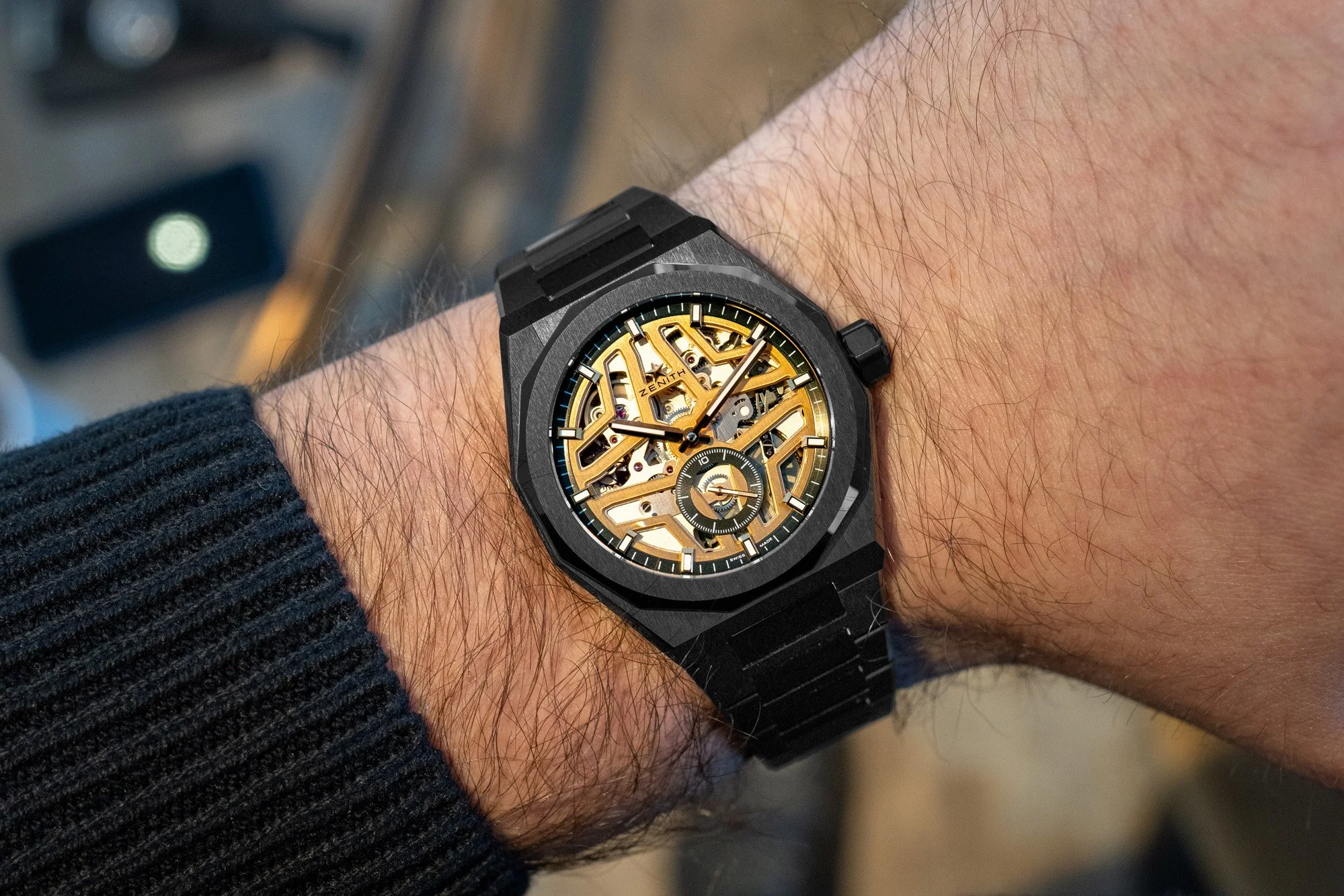
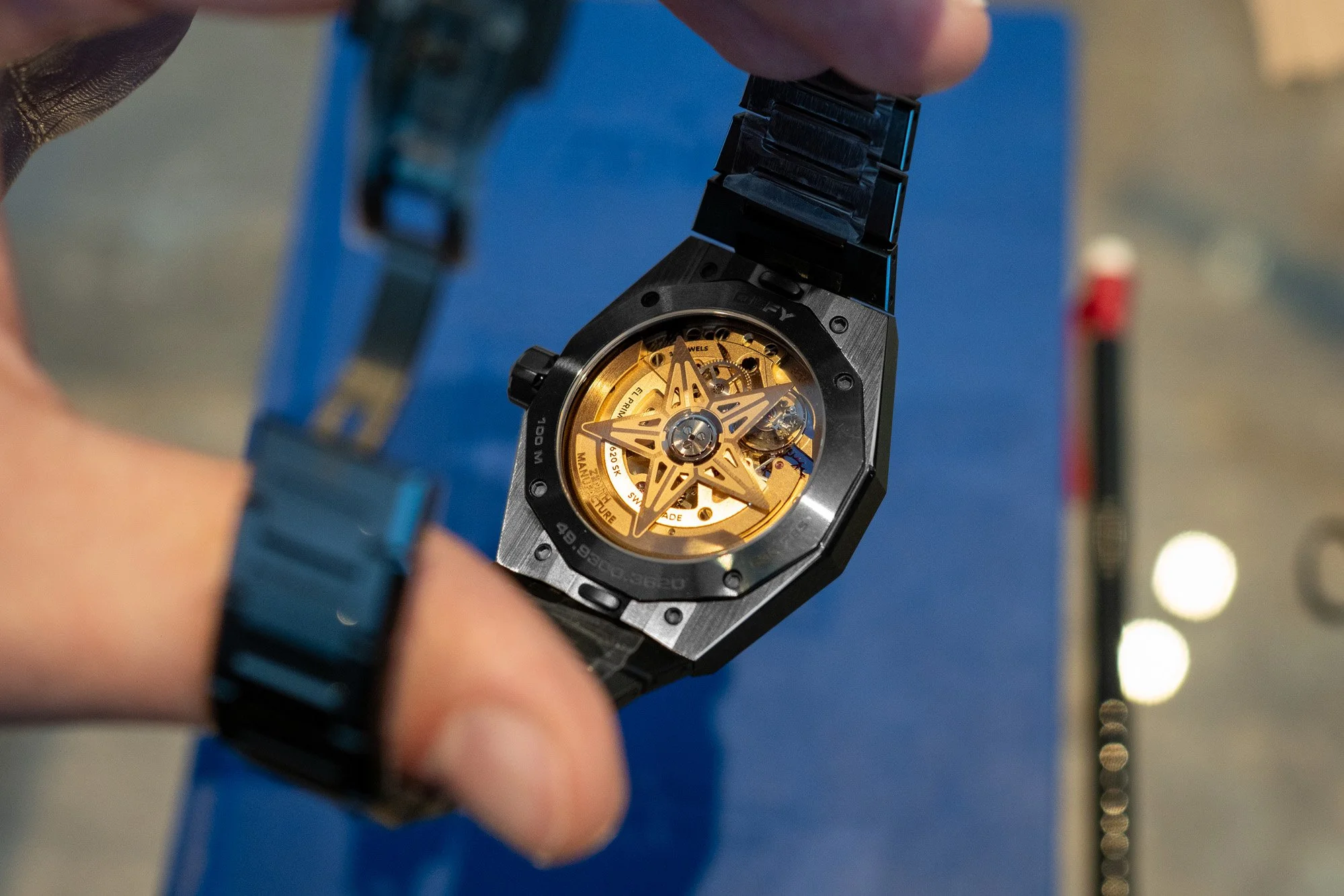
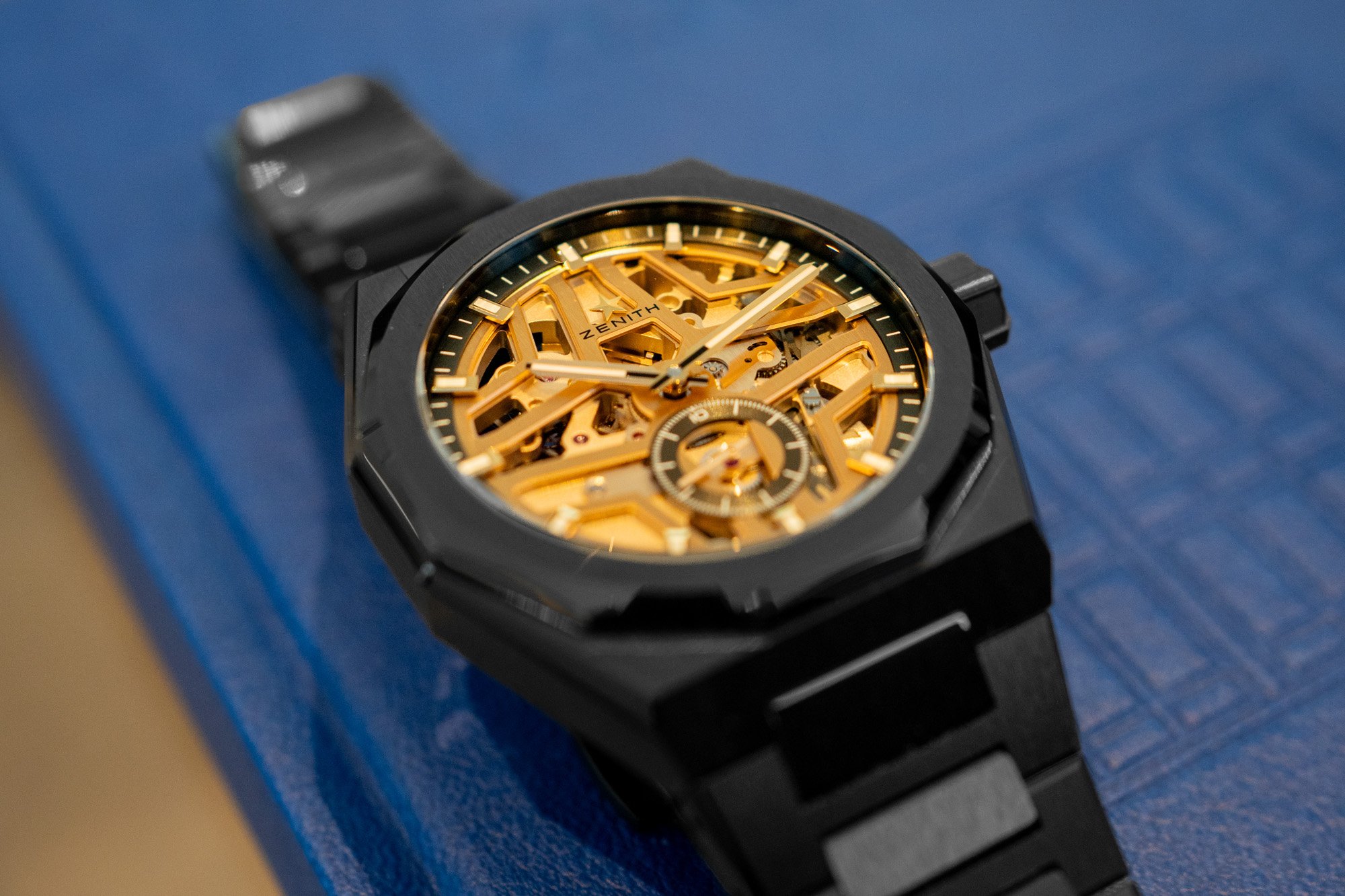
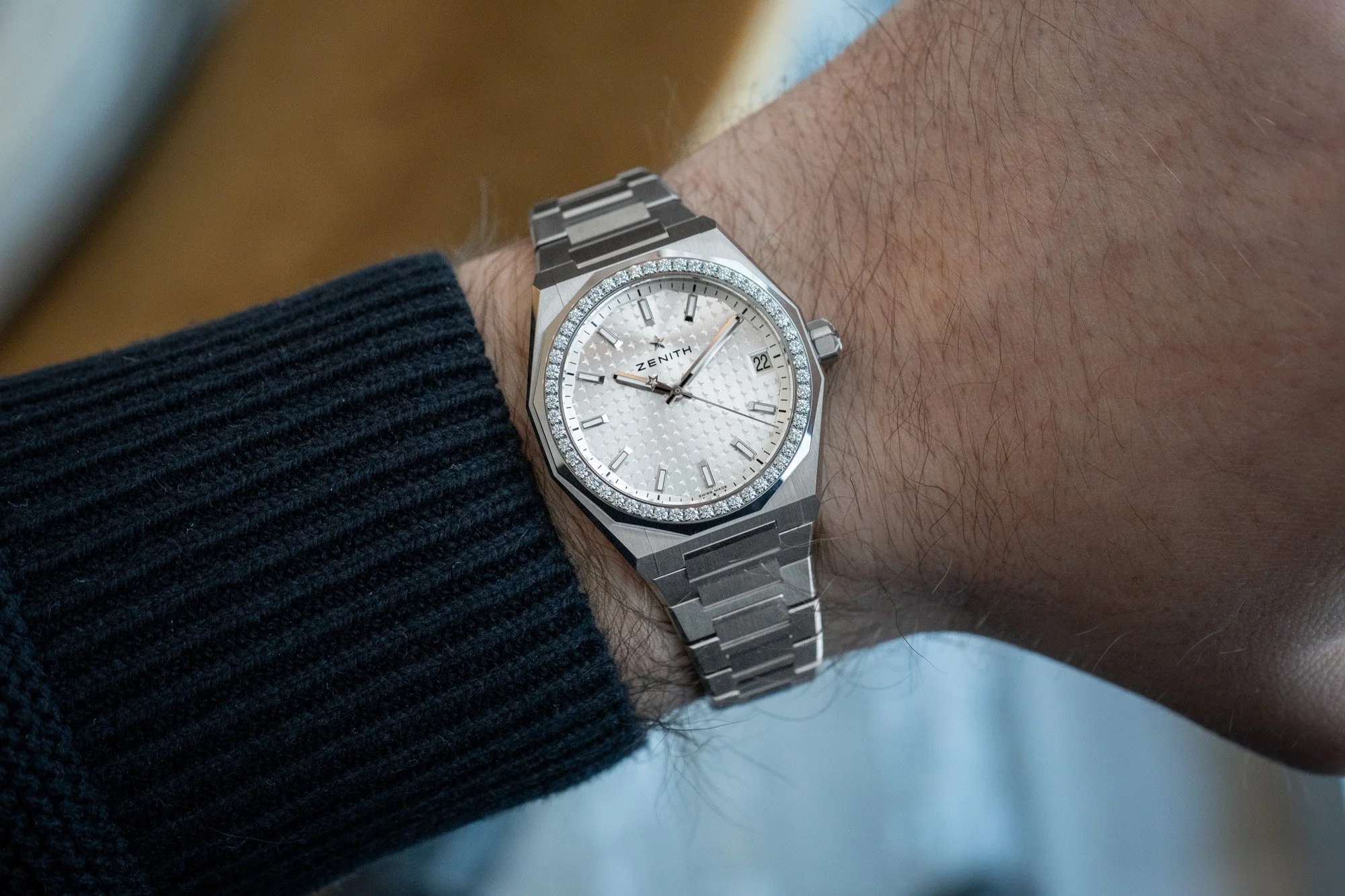
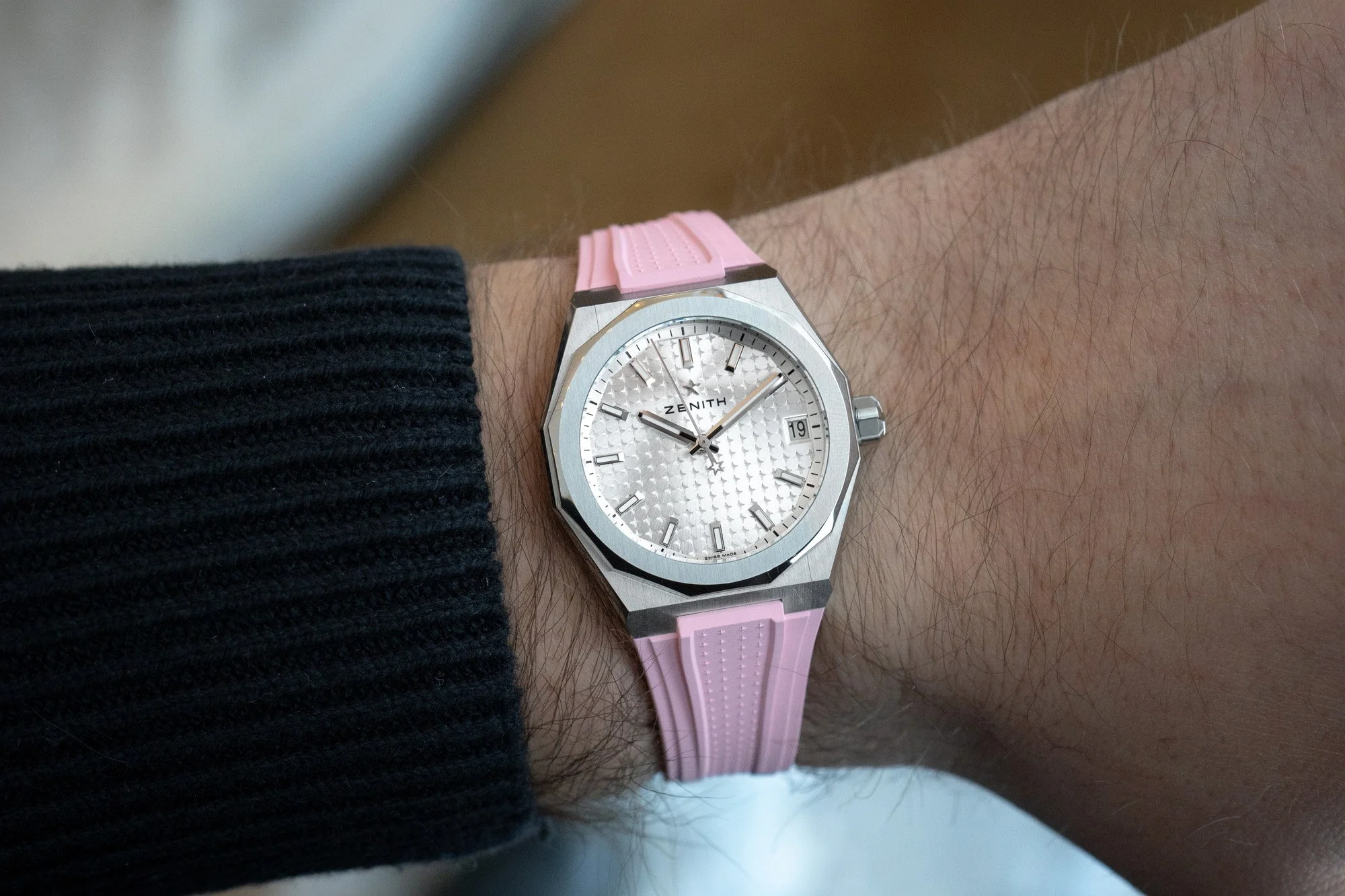
The larger Defy Skyline models remain true to the collection’s angular design language, blending finishing techniques to emphasize their aggressive geometry. A gradient dial speckled with the Zenith star motif or a sharply skeletonized variant gives the watches a sporty edge within the increasingly crowded world of integrated-bracelet design. Black ceramic, still uncommon at this scale and execution level, adds a cool-factor that feels genuinely distinctive here — something the Skyline line can occasionally struggle to achieve.
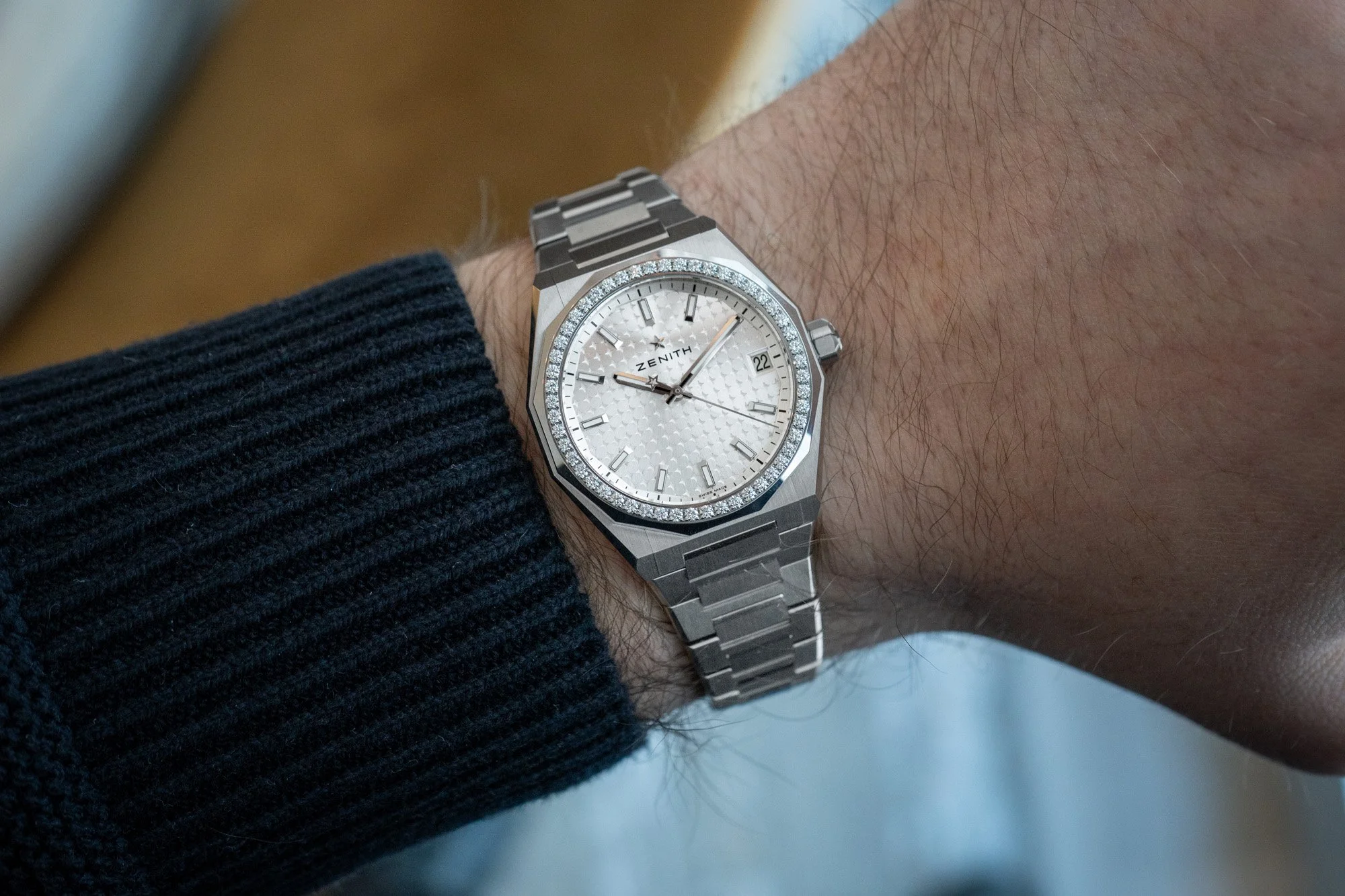
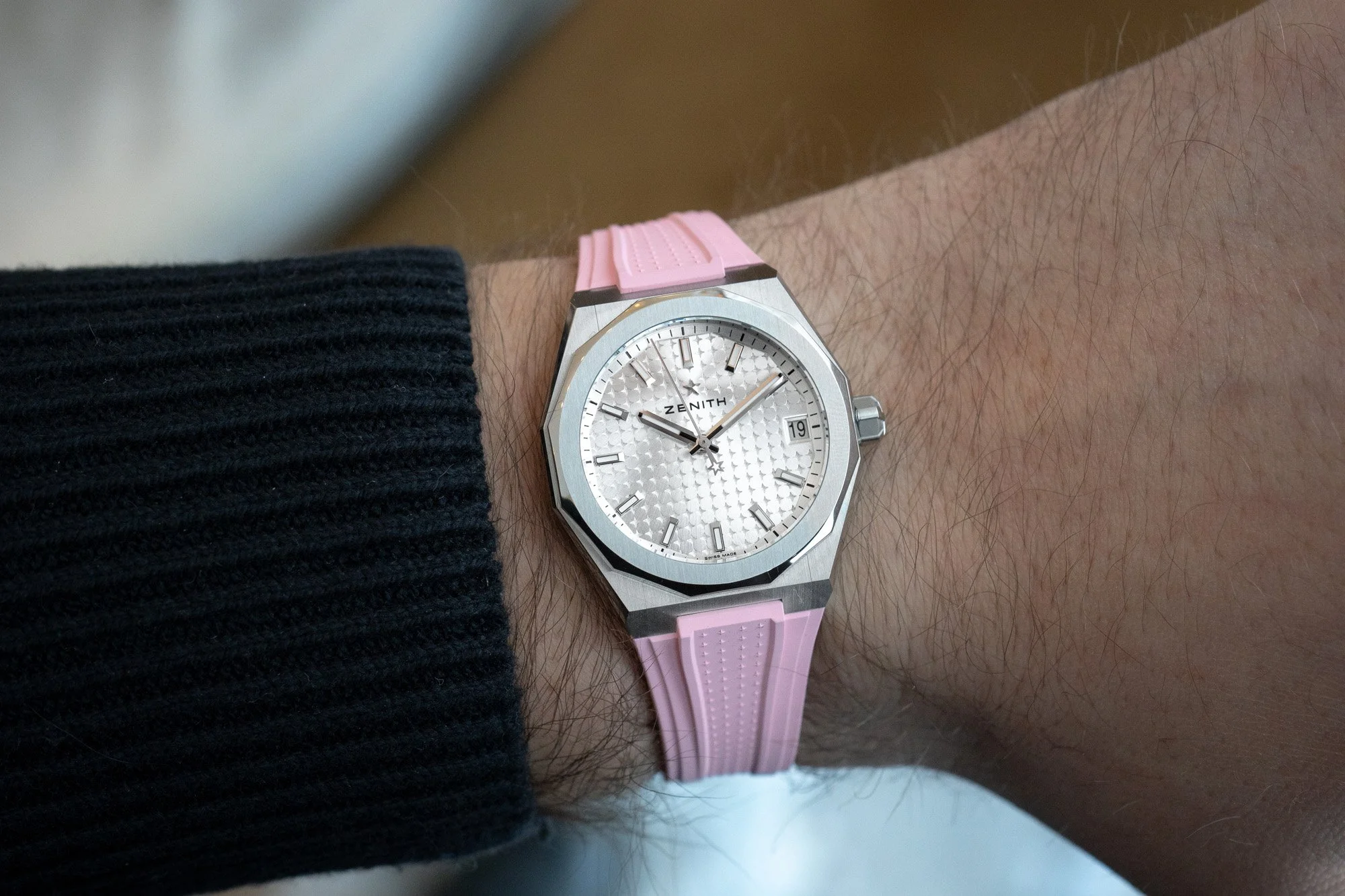
On the smaller end of the range, the emphasis shifts toward refinement and glamour. The gem-set bezel options stand out in particular, lending a sense of purpose to the 36mm collection that the repeating star-pattern dial in silver struggles to deliver on its own. The pastel rubber straps are a clever addition, though their intended audience feels slightly ambiguous. In practice, rubber remains a divisive choice in this size category, often perceived as casual — even when the price tag firmly suggests otherwise.
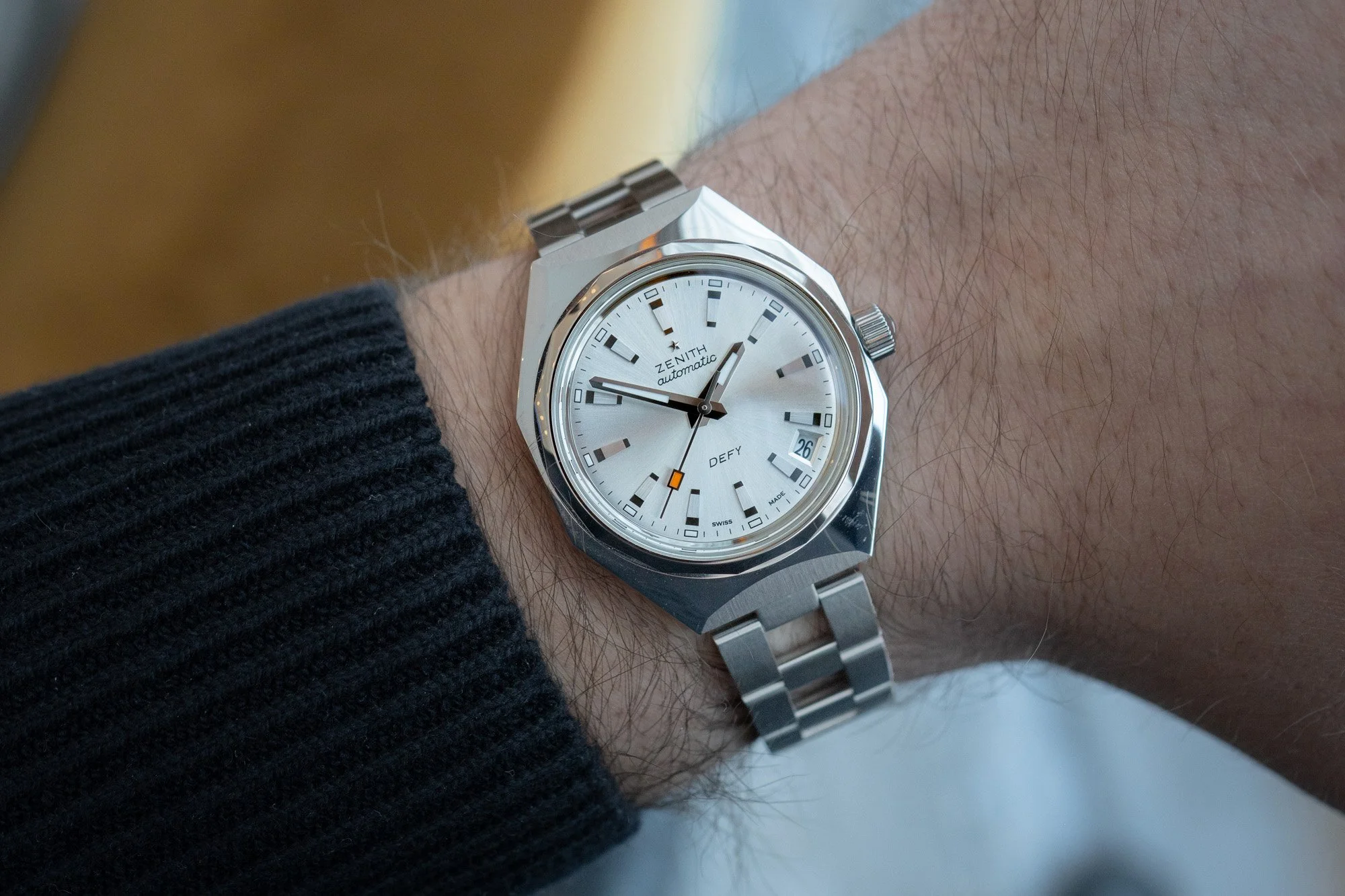
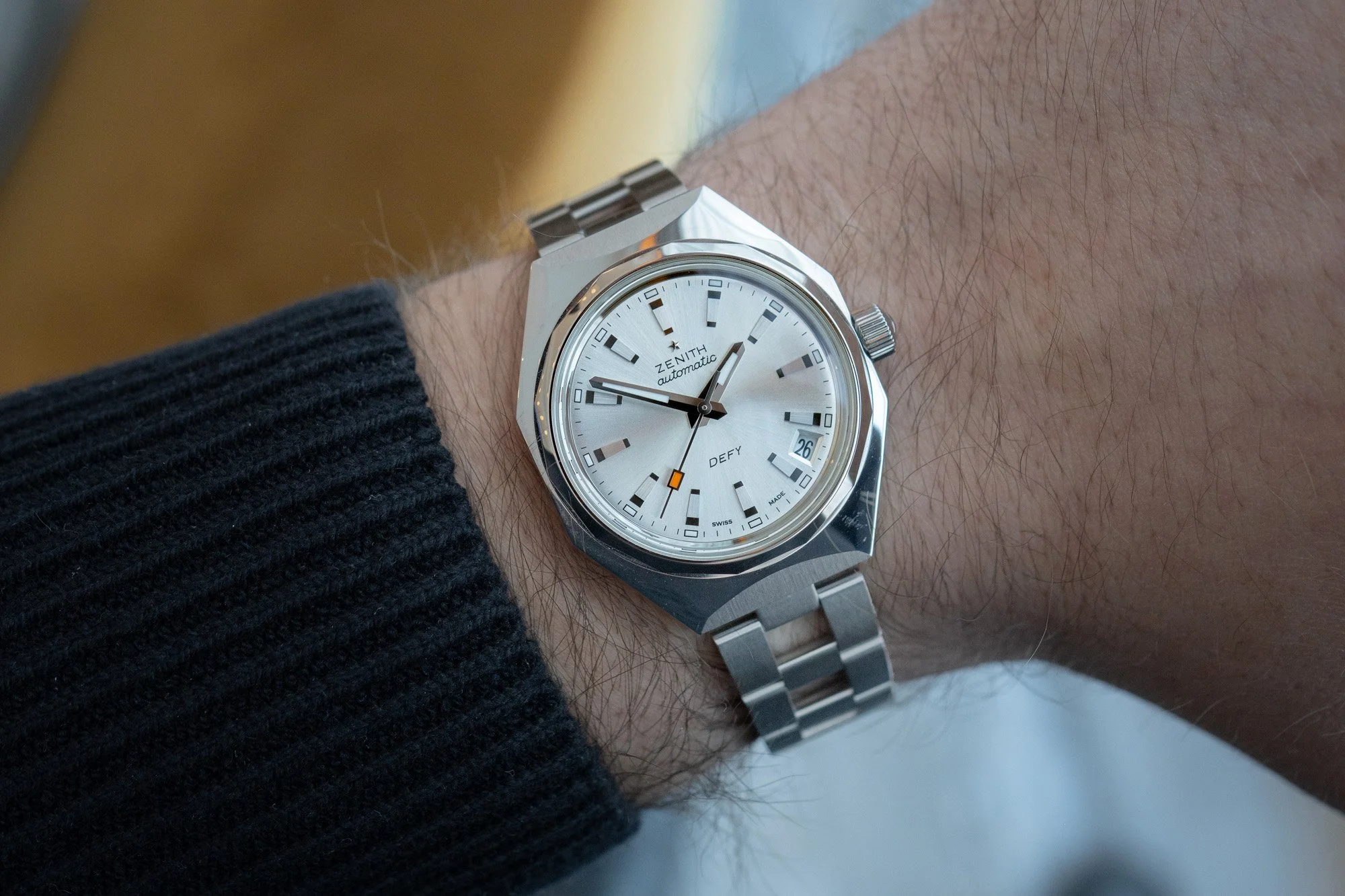
Zenith Defy Revival A3643 (wrist size 7.67 inches)
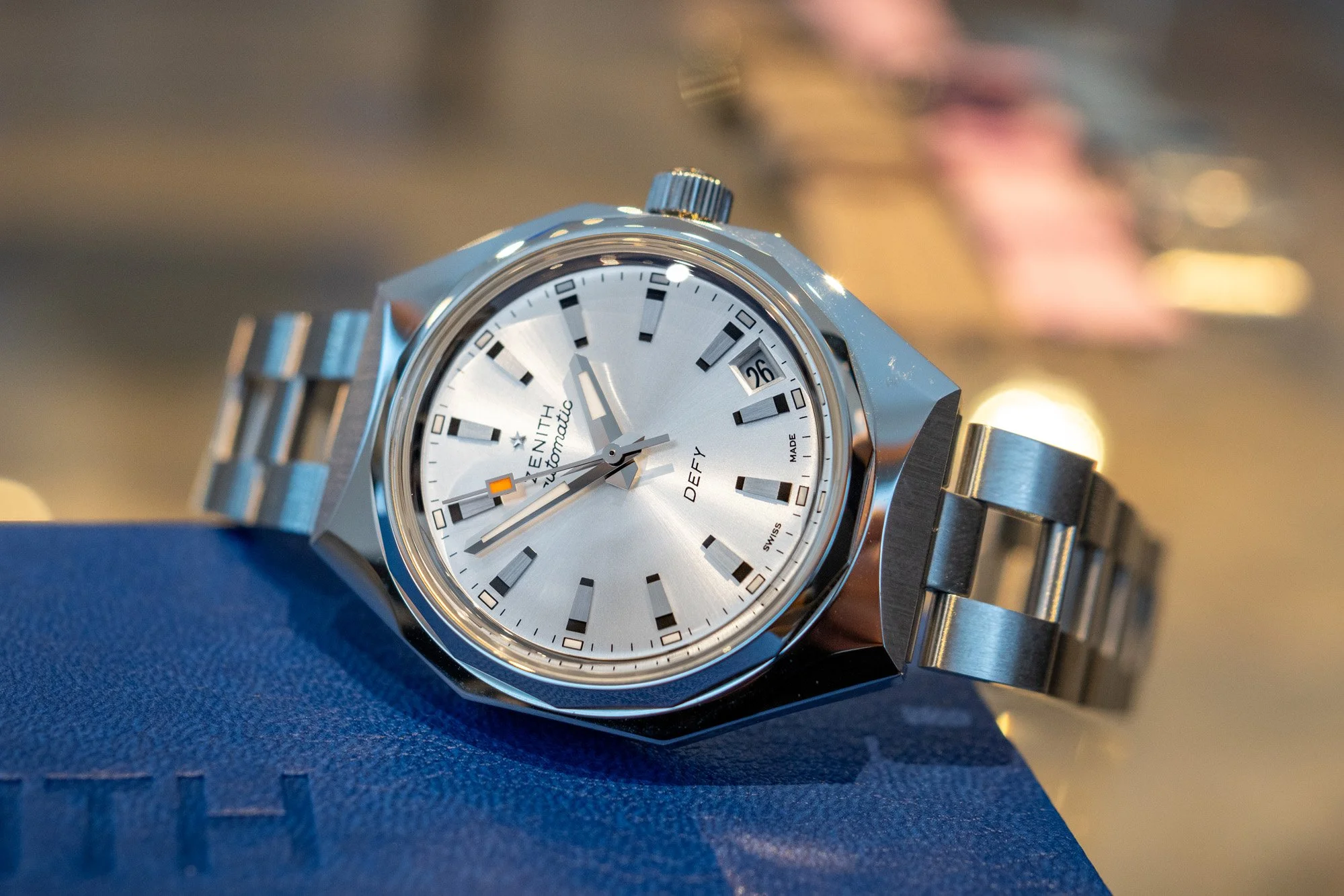
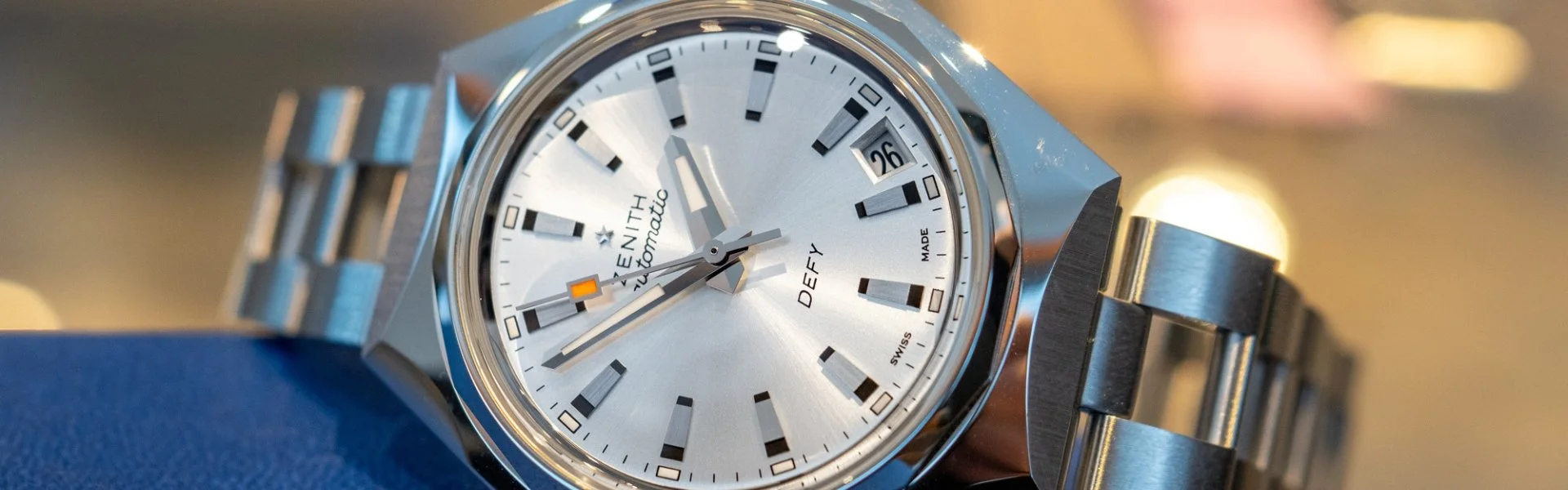
The real standout, however, is the Defy Revival A3643. Created using a 3D scan of a 1969 vintage reference to preserve its original proportions, the Revival is delightfully idiosyncratic. Nearly monochrome apart from its vivid, clementine-colored seconds hand, it relies on its finishing to break up what could otherwise be a bulbous silhouette. The brushing feels heavier than Zenith’s modern norm — on both case and bracelet — while the silver sunburst dial plays with light in a way that’s far more compelling in person than in photographs.
There’s a cohesiveness to the construction that reveals itself through touch. Running a finger from the heavily domed sapphire crystal down to the polished bezel and mid-case underscores the watch’s physical presence, a sensation reinforced by a surprising 300 meters of water resistance in what is otherwise a time-only daily wearer. The Elite 670 automatic movement, visible through a display caseback, completes the package.
At $7,800, it’s undeniably a premium proposition for a watch in this category. But this time, Zenith has captured a kind of charm that feels earned rather than nostalgic — and that makes the Revival feel like one of the week’s most convincing long-term plays.
TAG Heuer
Listening to collectors, flexing technically, and winning on emotion.
TAG Heuer took a focused approach this year, centering nearly its entire presentation around the Carrera Glassbox platform. Rather than expanding laterally, the brand chose to push the collection in three distinct directions: scale, complication, and heritage.
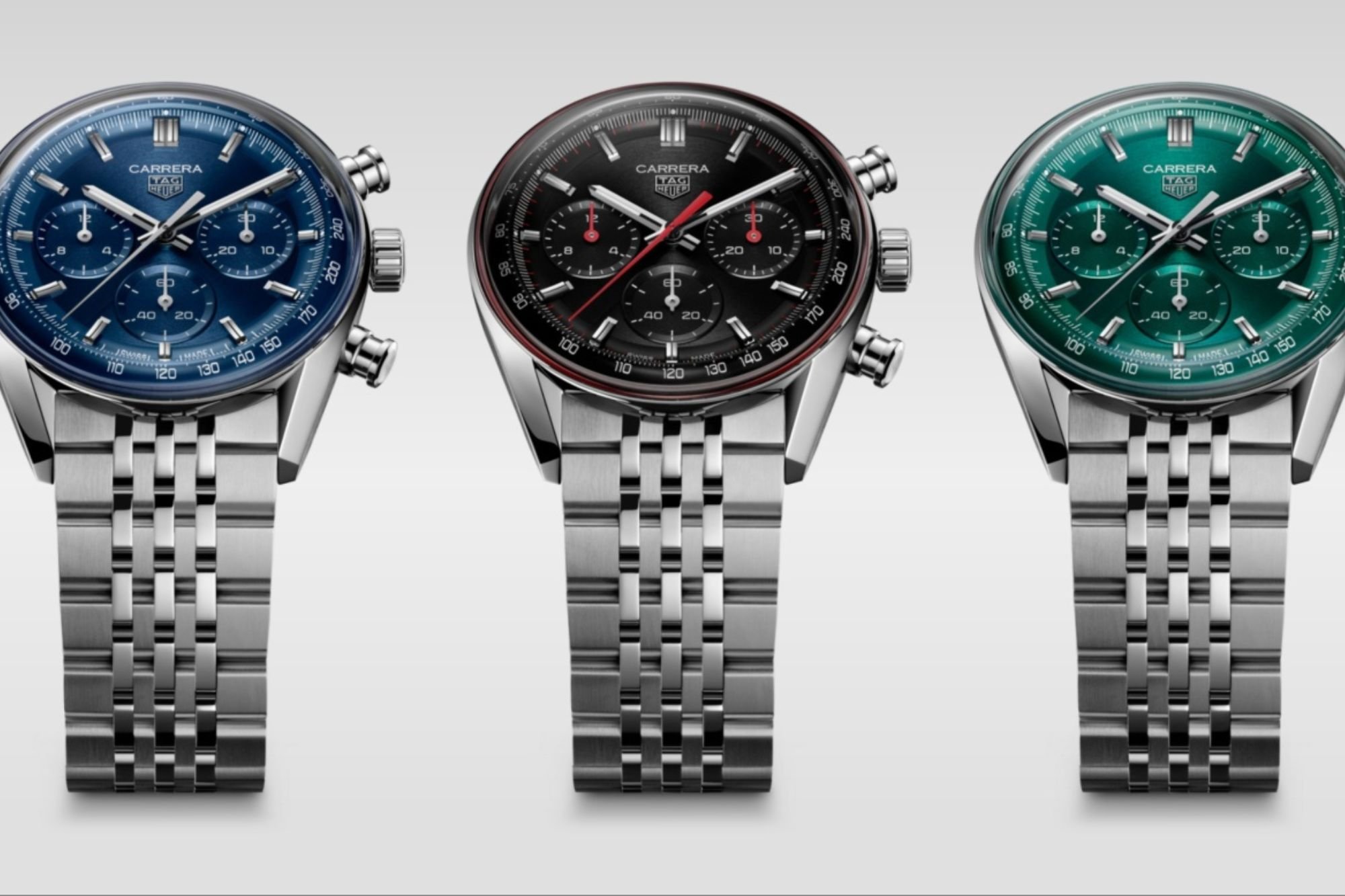
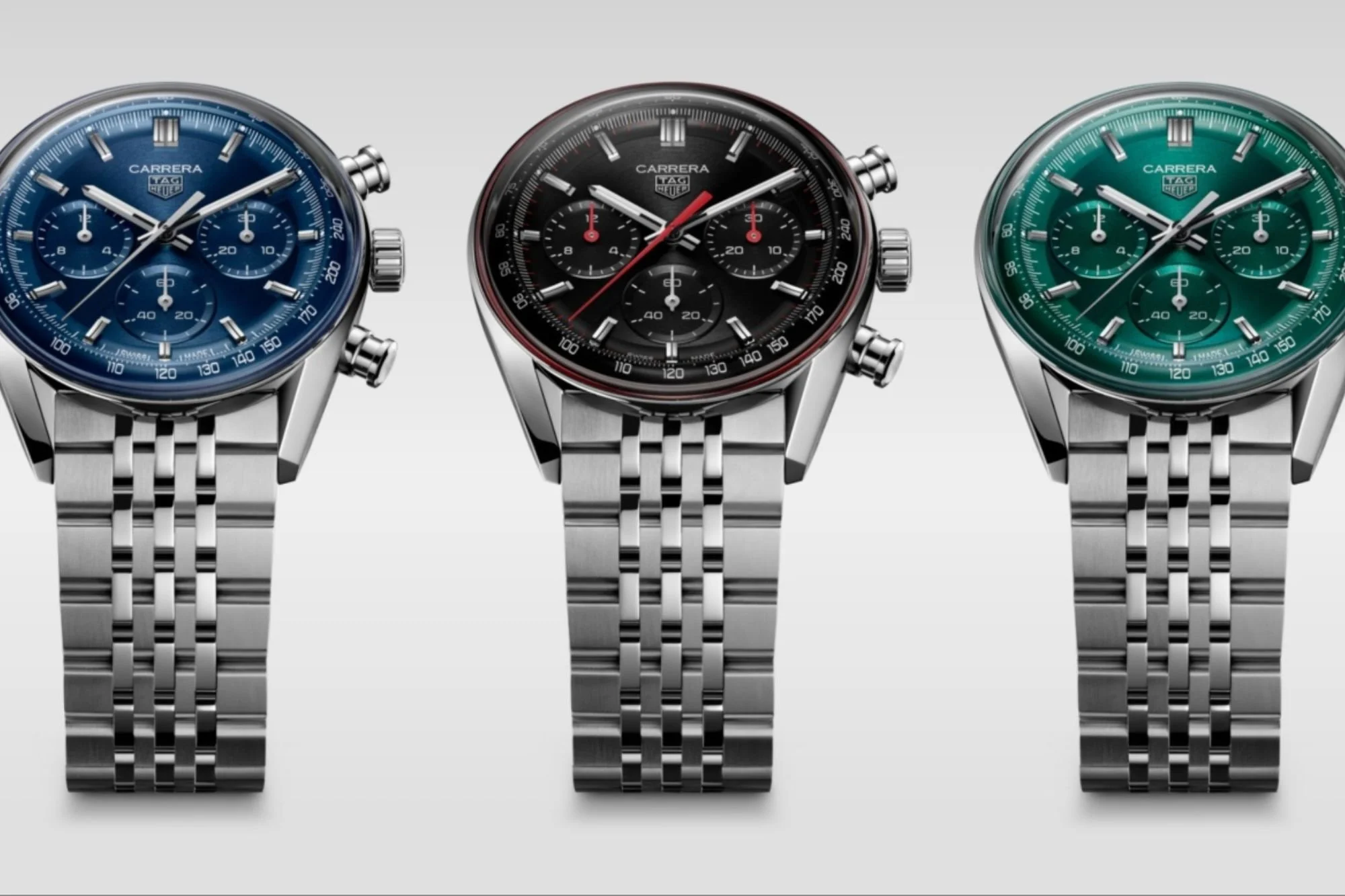
TAG Heuer Carrera Chronograph Glassbox 41mm
Starting with size, the new 41mm Carrera Chronographs feel like a direct response to collectors who’ve been quietly asking for something with more wrist presence. The larger cases scale up not just in diameter, but in thickness and lug-to-lug as well, maintaining the proportions that made the smaller models successful. Launch colors — green, blue, and black — are familiar, but the addition of red chronograph hands adds just enough contrast to keep things visually engaging. At $7,950 MSRP, these sit firmly in the brand’s modern sweet spot: not revolutionary, but comfortably positioned.
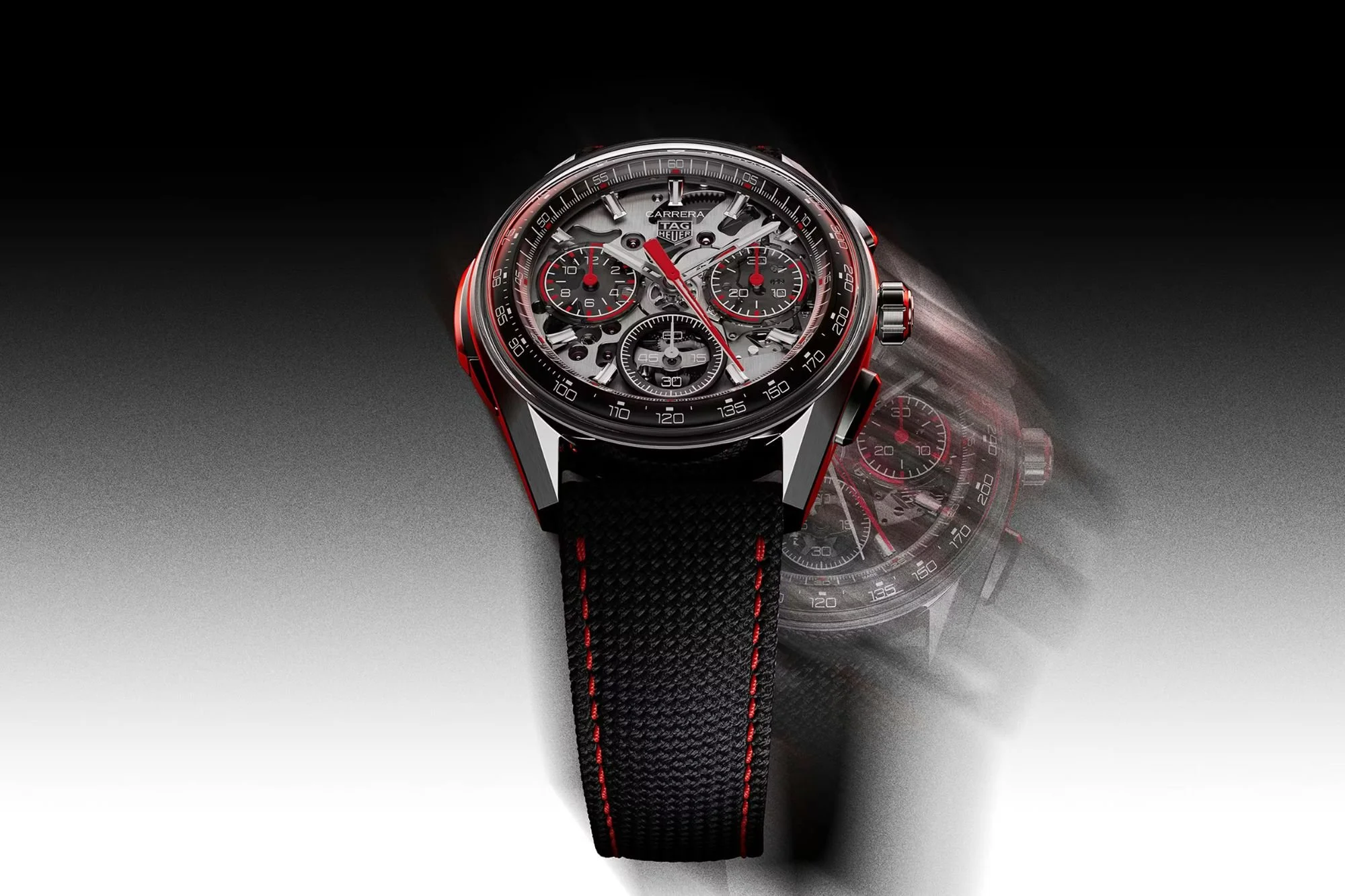
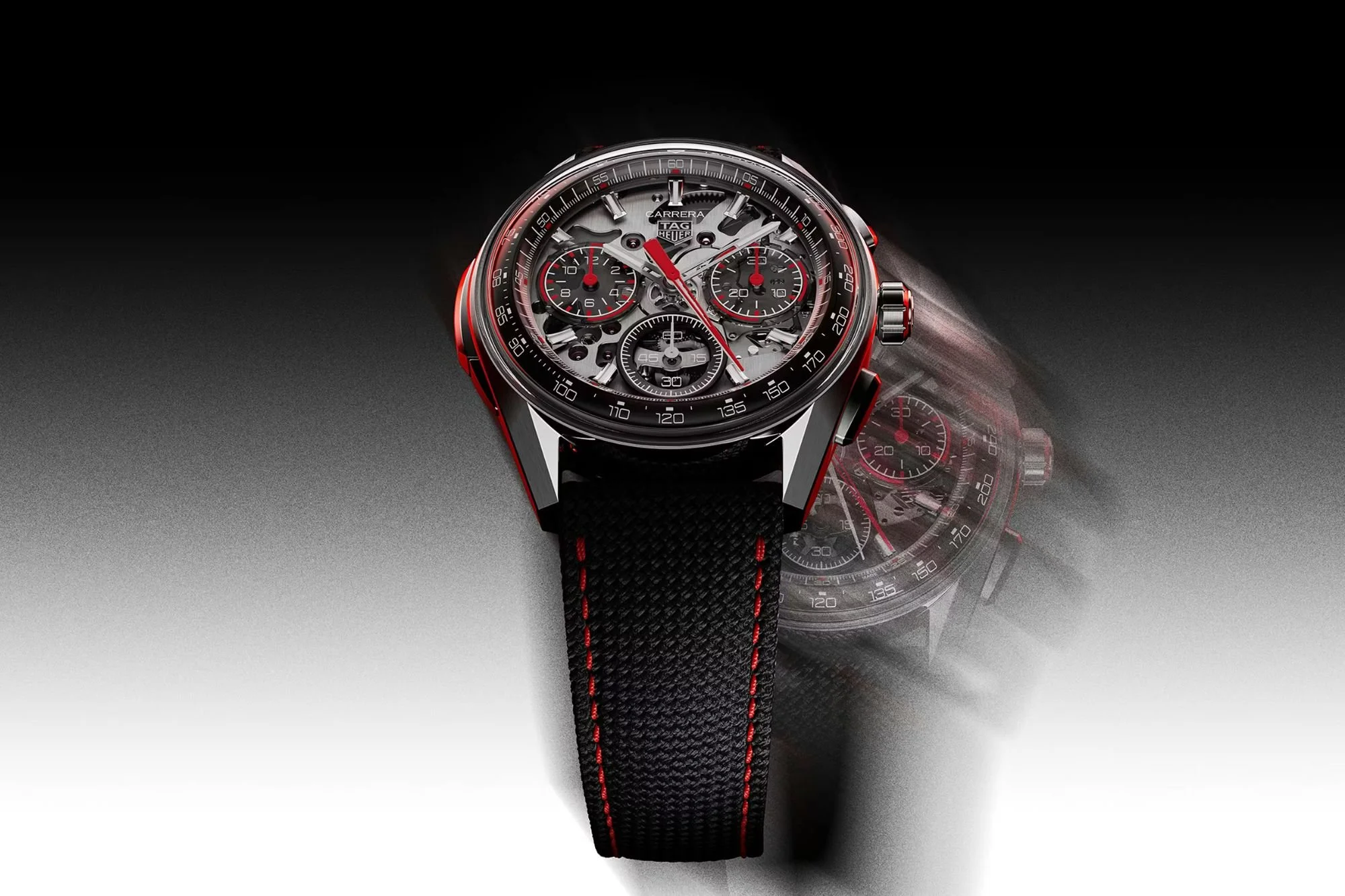
TAG Heuer Split-Seconds Carrera Chronograph
Technically, the headline grabber is the new Carrera Split-Seconds Chronograph, the first rattrapante to appear within the Glassbox configuration. Housed in a 42mm titanium case, it integrates a secondary pusher discreetly at nine o’clock, preserving the case’s clean profile. The smoked acrylic dial offers a partial view into the movement’s architecture — more suggestion than spectacle — lending the watch a stealthy, futuristic character. At $127,000, it’s a statement piece in every sense, though one that will likely remain more symbolic than commercially impactful.
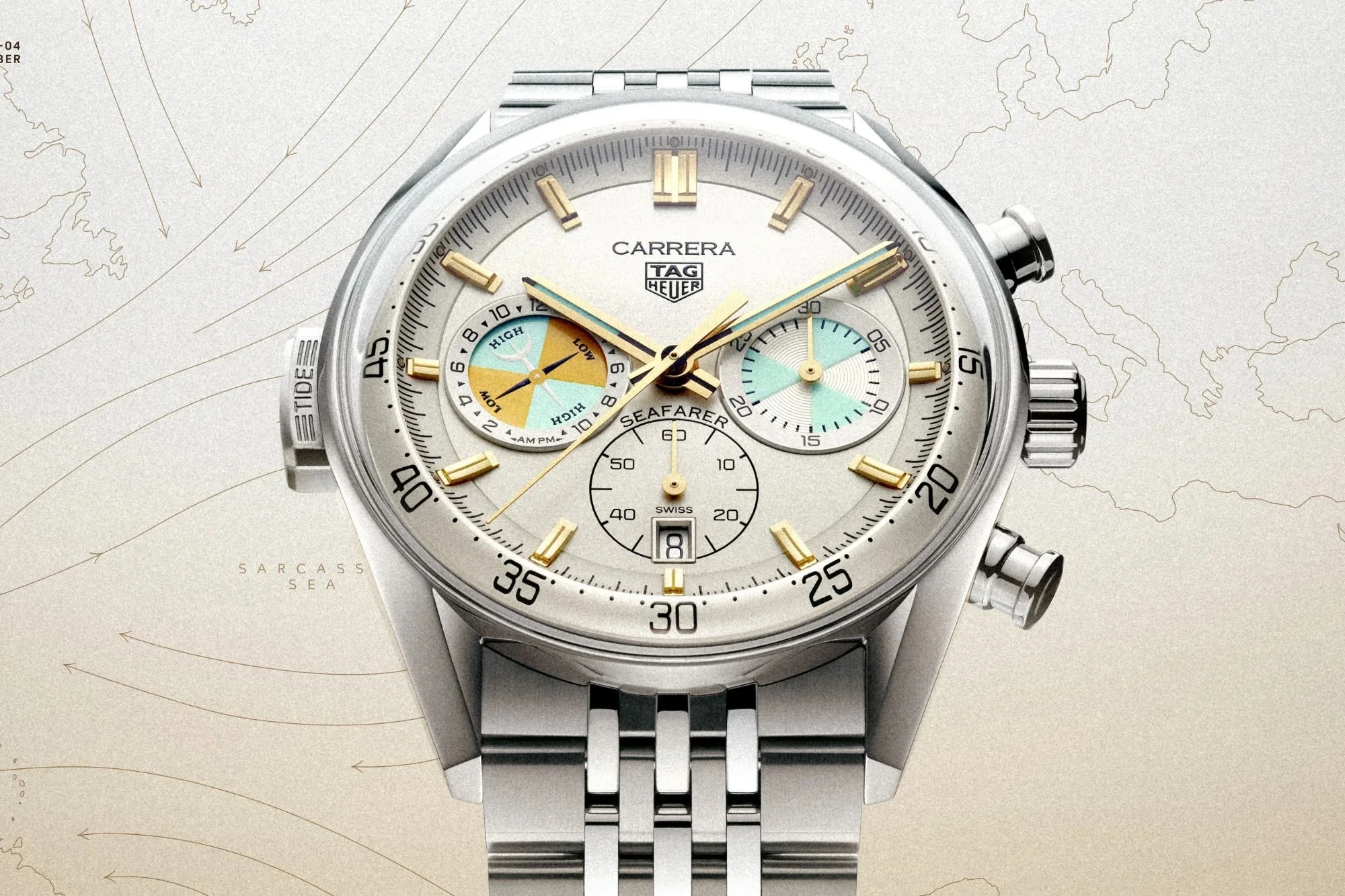
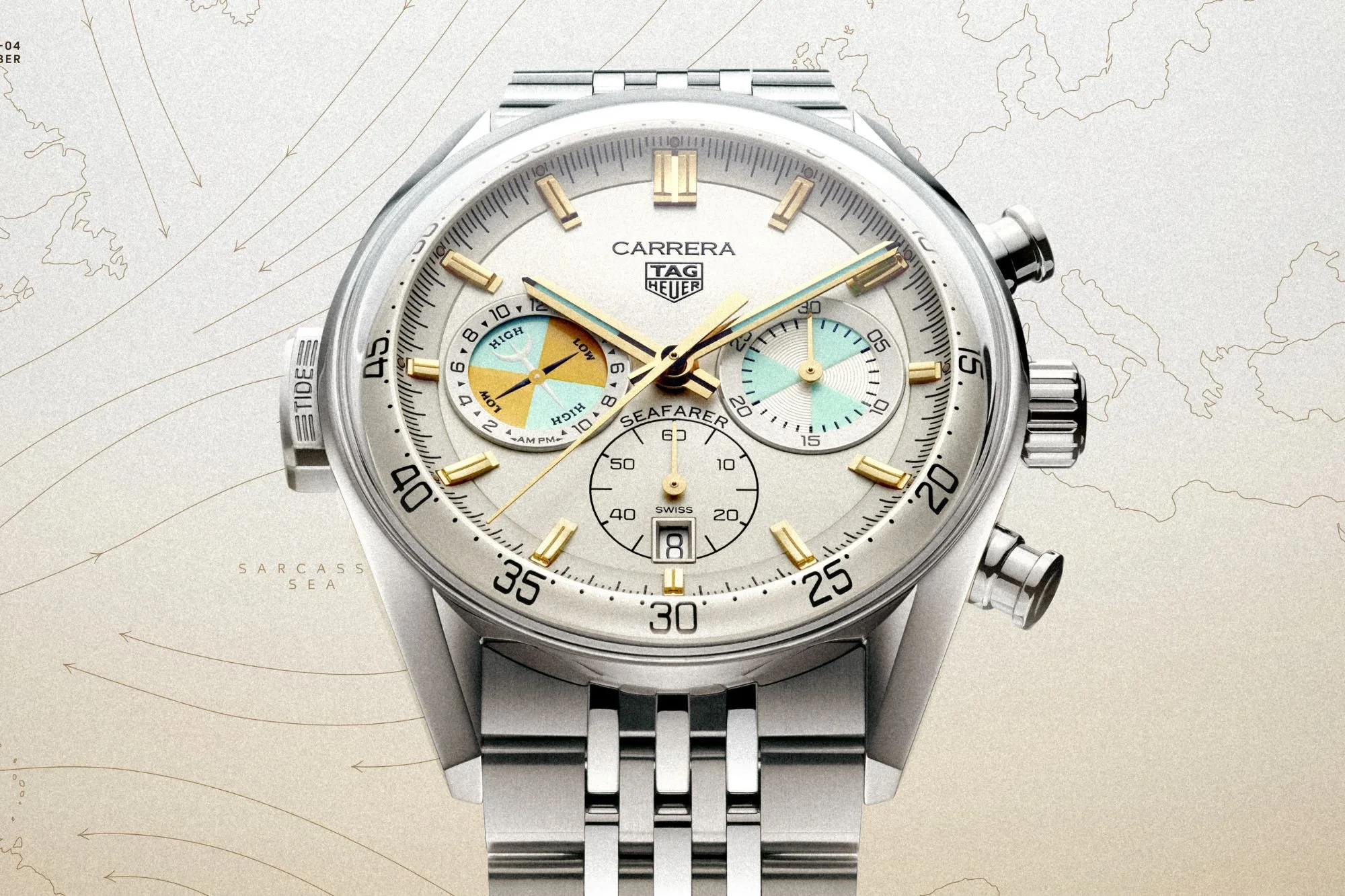
TAG Heuer Carrera Chronograph Seafarer
The emotional high point, however, is the Carrera Chronograph Seafarer. Drawing inspiration from the Abercrombie & Fitch–branded Solunar watches of the past — which famously carried Heuer movements — the modern reinterpretation strikes a careful balance between nostalgia and contemporary execution. A champagne dial, accented with aged orange and teal details, is elevated by applied elements plated in 18k 3N yellow gold. Even the lume gets a playful touch, with a thin teal strip running through the center of the hands.
For collectors familiar with the vintage originals, it’s a satisfying homage that feels sincere rather than opportunistic. At $8,800, including both bracelet and textile strap, the pricing raises an eyebrow — particularly when compared to the Hodinkee limited edition that preceded it — but the design itself lands squarely among the week’s most successful reinterpretations of brand heritage.
Hublot
Volume, variety, and spectacle — unapologetically on brand.
It would be easy to assume Hublot arrived with a single headline release, but the brand quietly rolled out six distinct collections — some blending into familiar territory, others leaning heavily into celebrity and concept-driven design to draw attention.
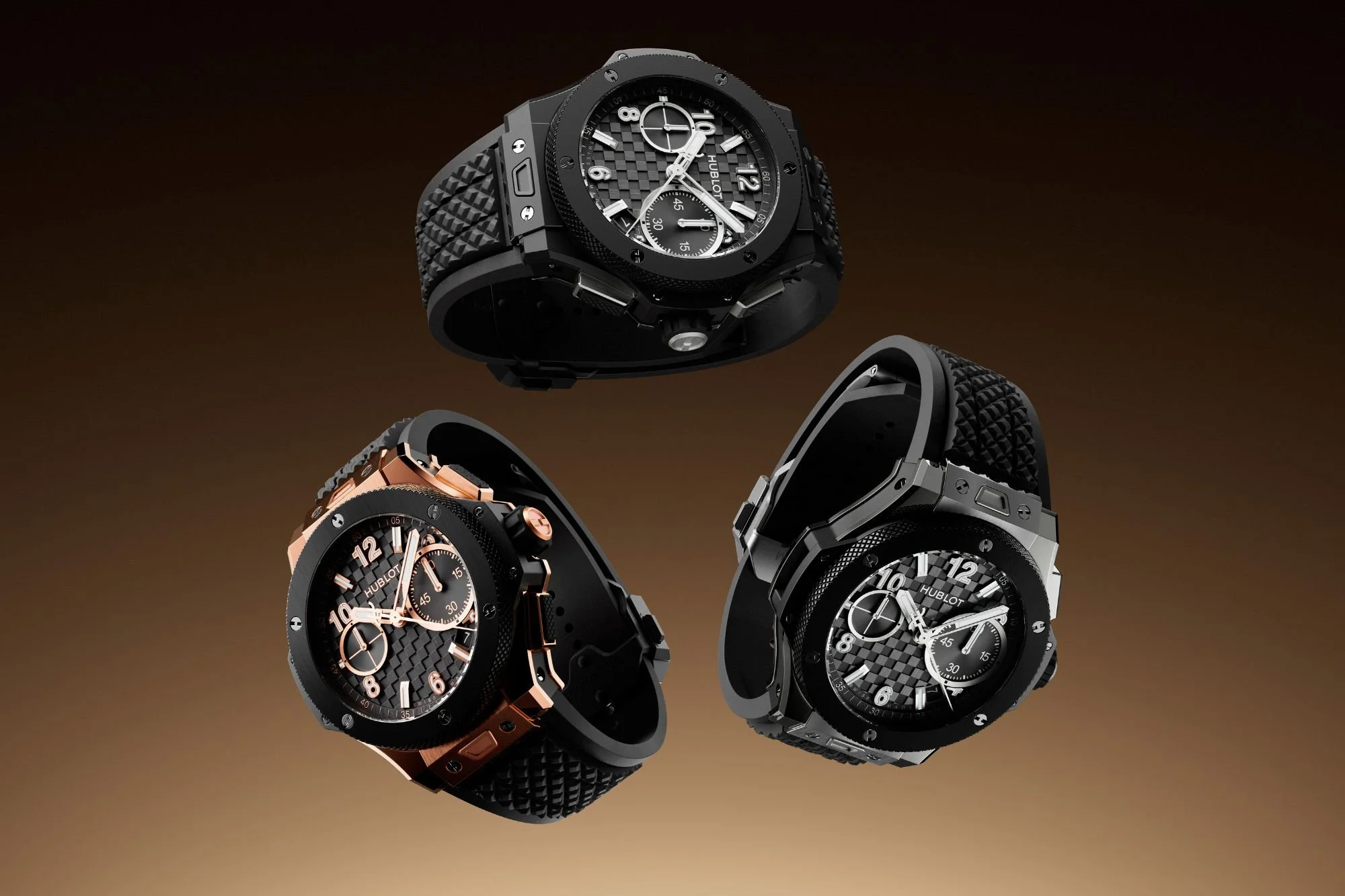
Hublot Big Bang Original Unico
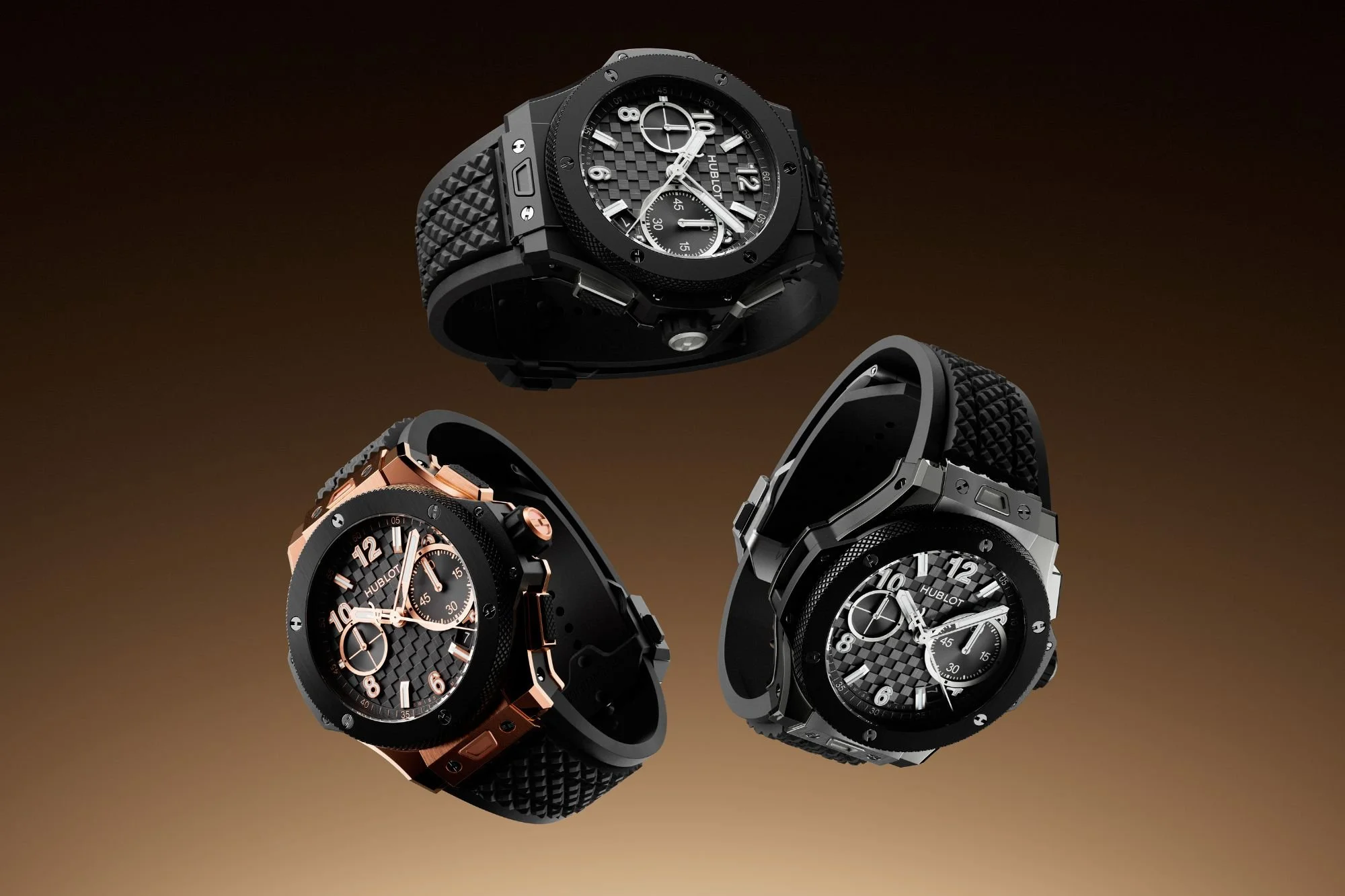
At the core sits the Big Bang Original Unico, now entering its 21st year with a meaningful mechanical upgrade. For the first time, the in-house Unico chronograph movement — introduced in 2010 — is fully visible through a sapphire caseback, revealing its column wheel, dual-clutch system, silicone escapement, optimized gear train, and skeletonized tungsten rotor. The 43mm case has been refined with smoother lugs and more pronounced beveling, while a new carbon-patterned dial sharpens the overall visual impact.
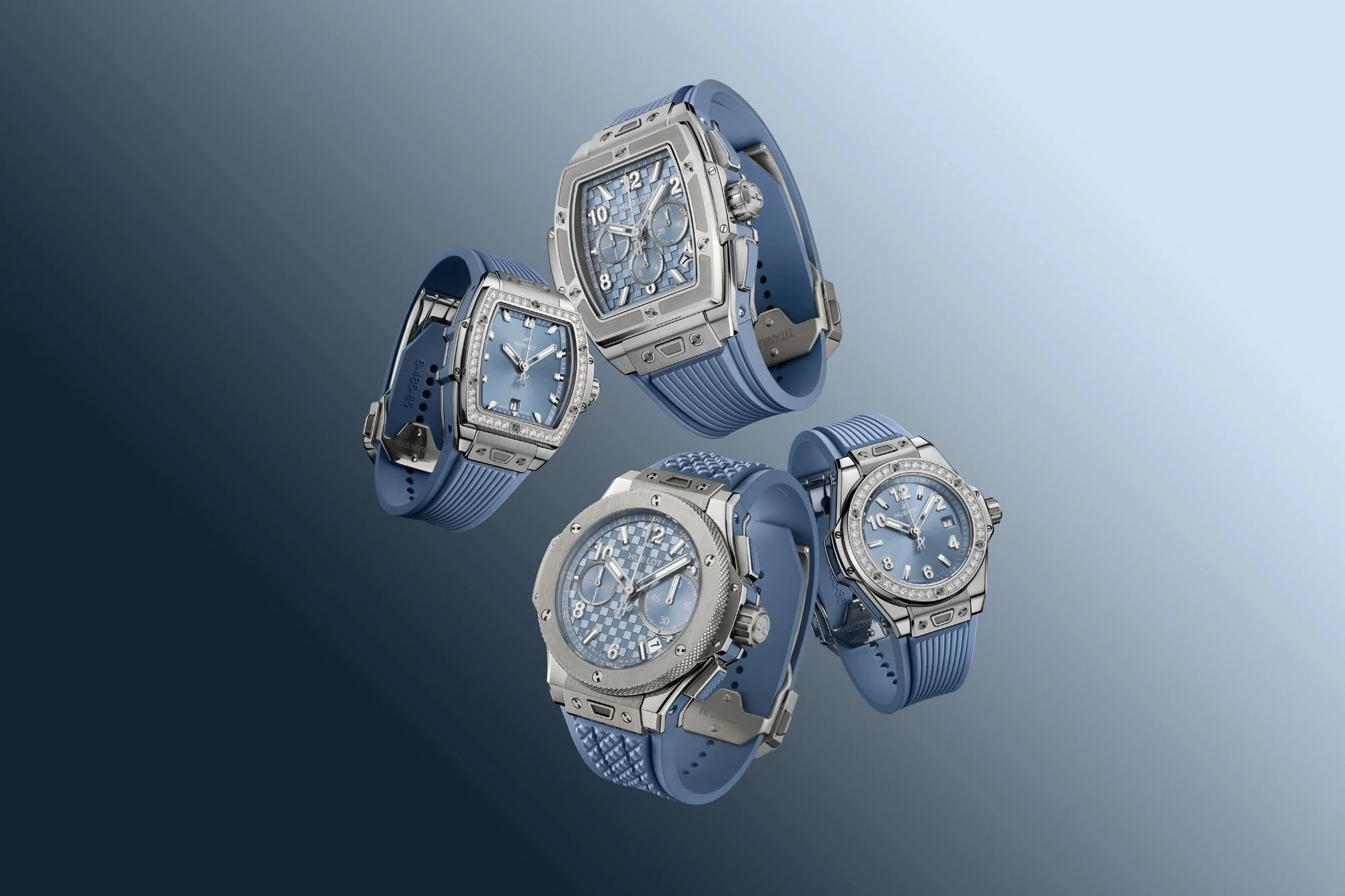
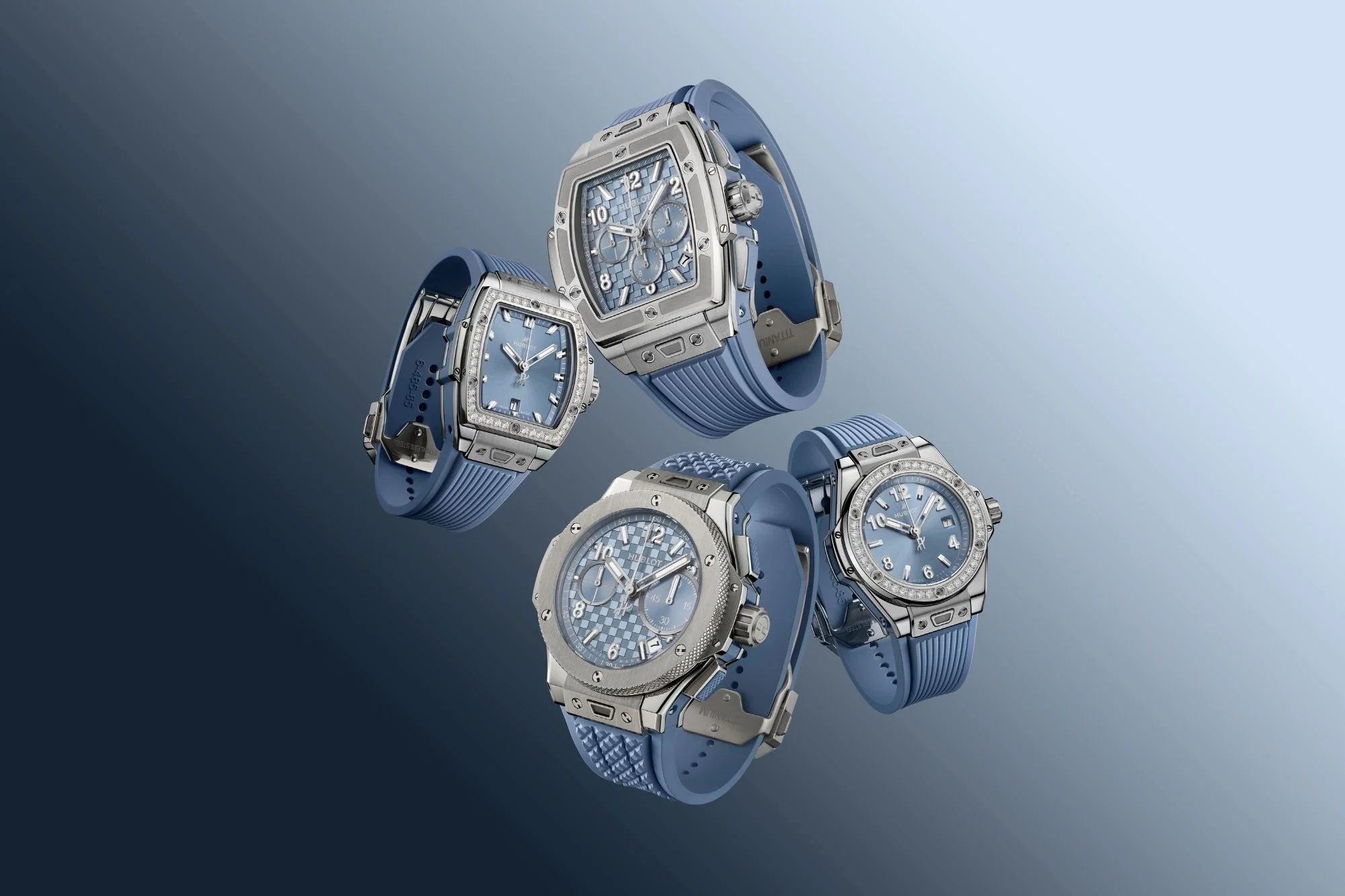
On the softer side of Hublot’s typically aggressive design language, the Big Bang Coal Blue Editions introduce a pale, icy shade developed to feel “less poolside and more storm cloud over the Alps.”
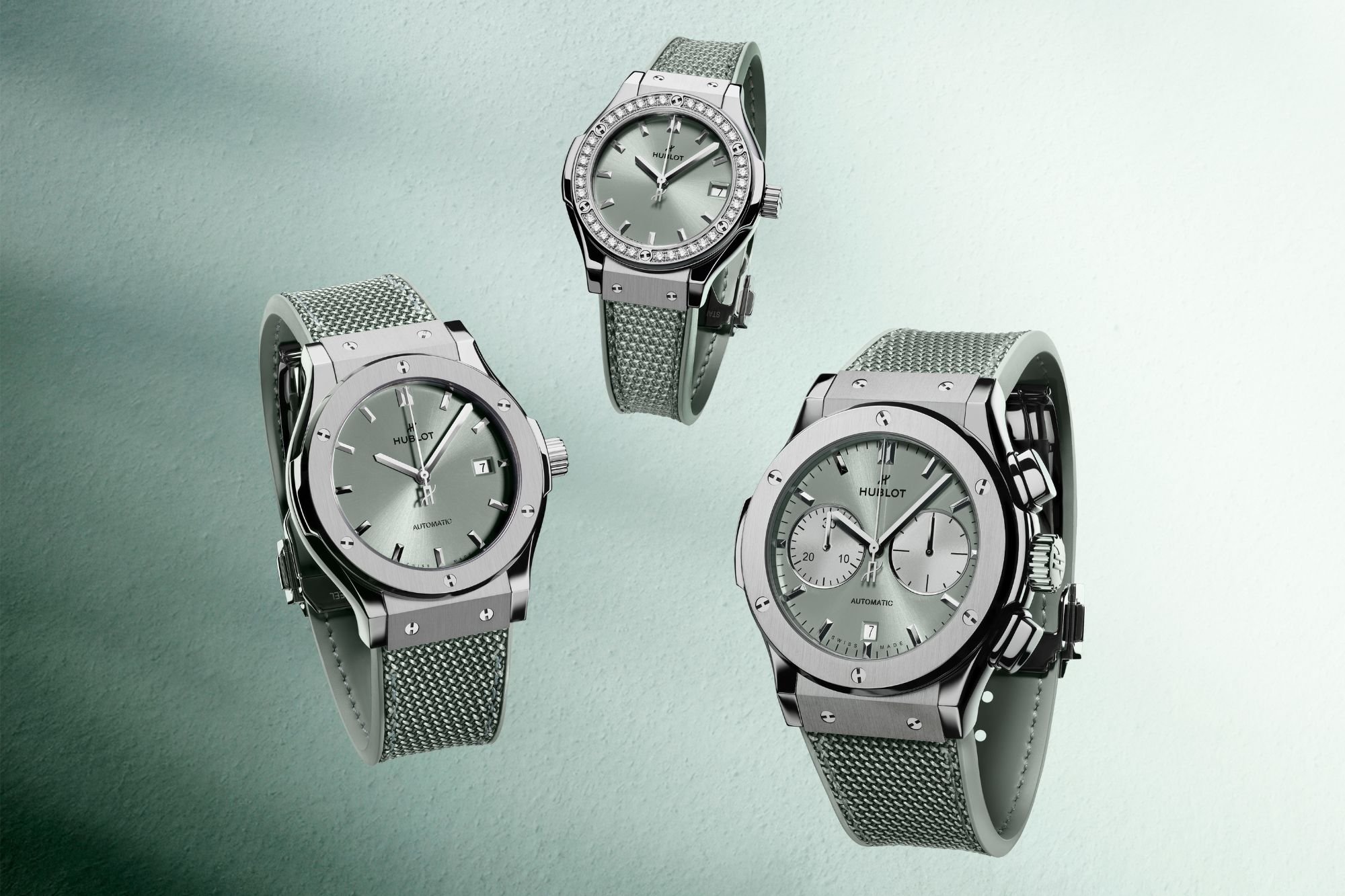
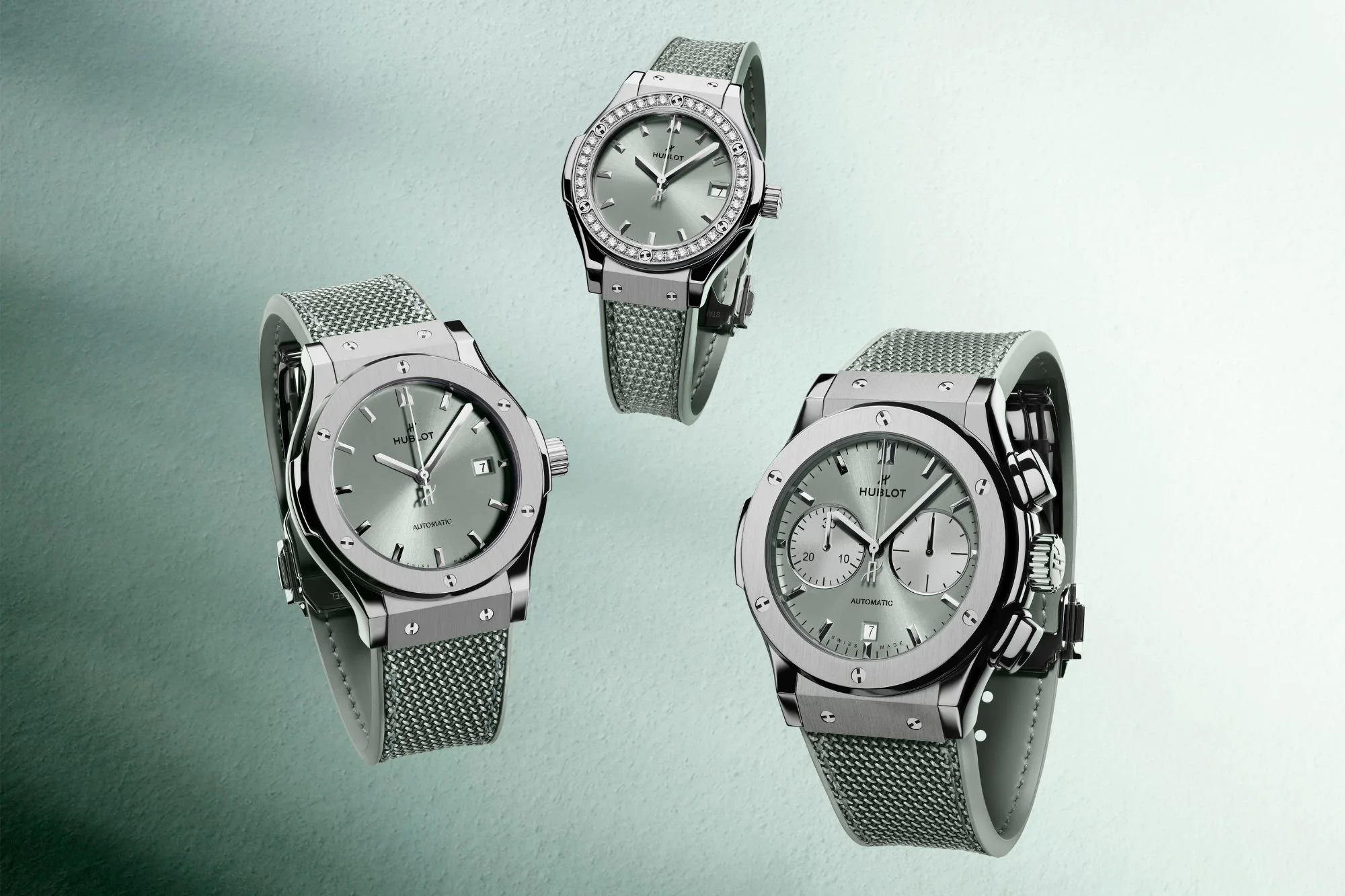
The Classic Fusion Sage Green Editions follow a similar philosophy, dialing back the saturation in favor of a more contemporary, broadly appealing tone.
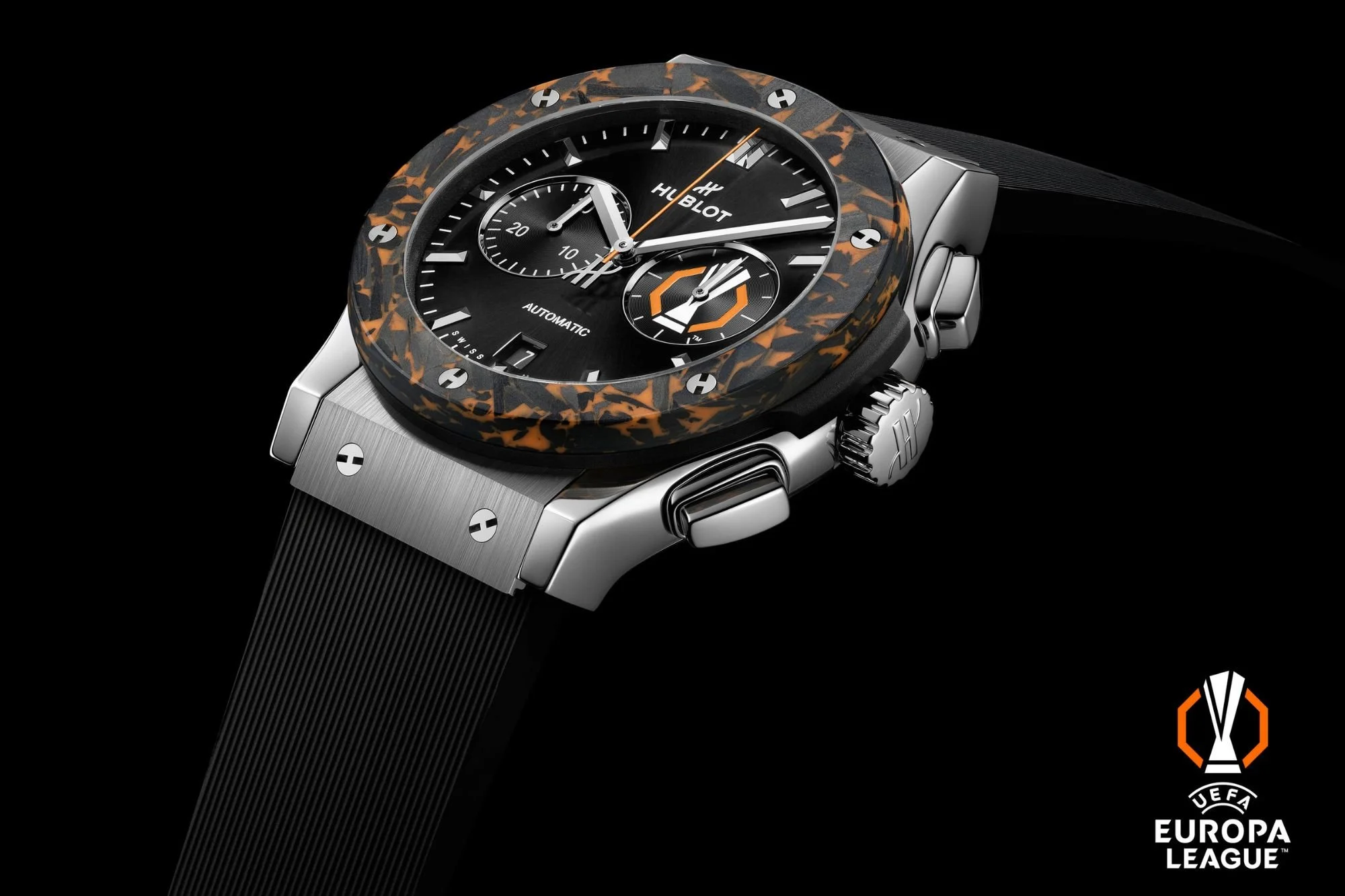
If, like me, you follow European soccer and are used to seeing the Hublot name on the timing board or an Mbappe X Hublot commercial pop up from time to time, then the Hublot Classic Fusion Chronograph Europa League will come as no surprise. As a licensee and official timekeeper of the Europa League since 2015, Hublot has now released its third piece tied to the brand.
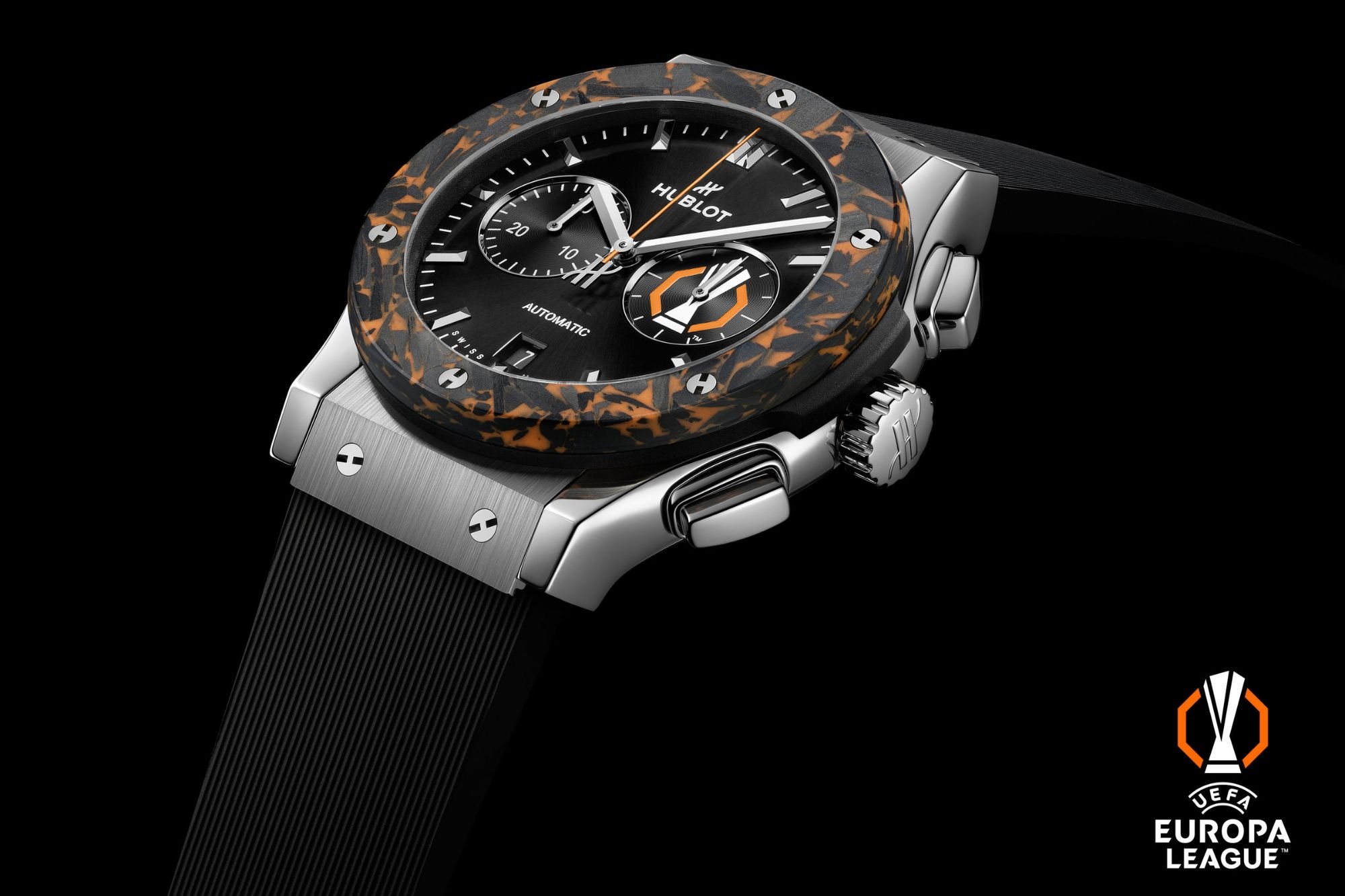
Hublot Classic Fusion Chronograph Europa League
The Classic Fusion Chronograph Europa League leans fully into Hublot’s long-standing role as official timekeeper of European football. Limited to 50 pieces, it features a satin-brushed titanium case, a micro-glass fiber bezel in the league’s signature colors, and a stylized trophy motif embedded in the three o’clock subdial — a small but unmistakable nod to its sporting ties.
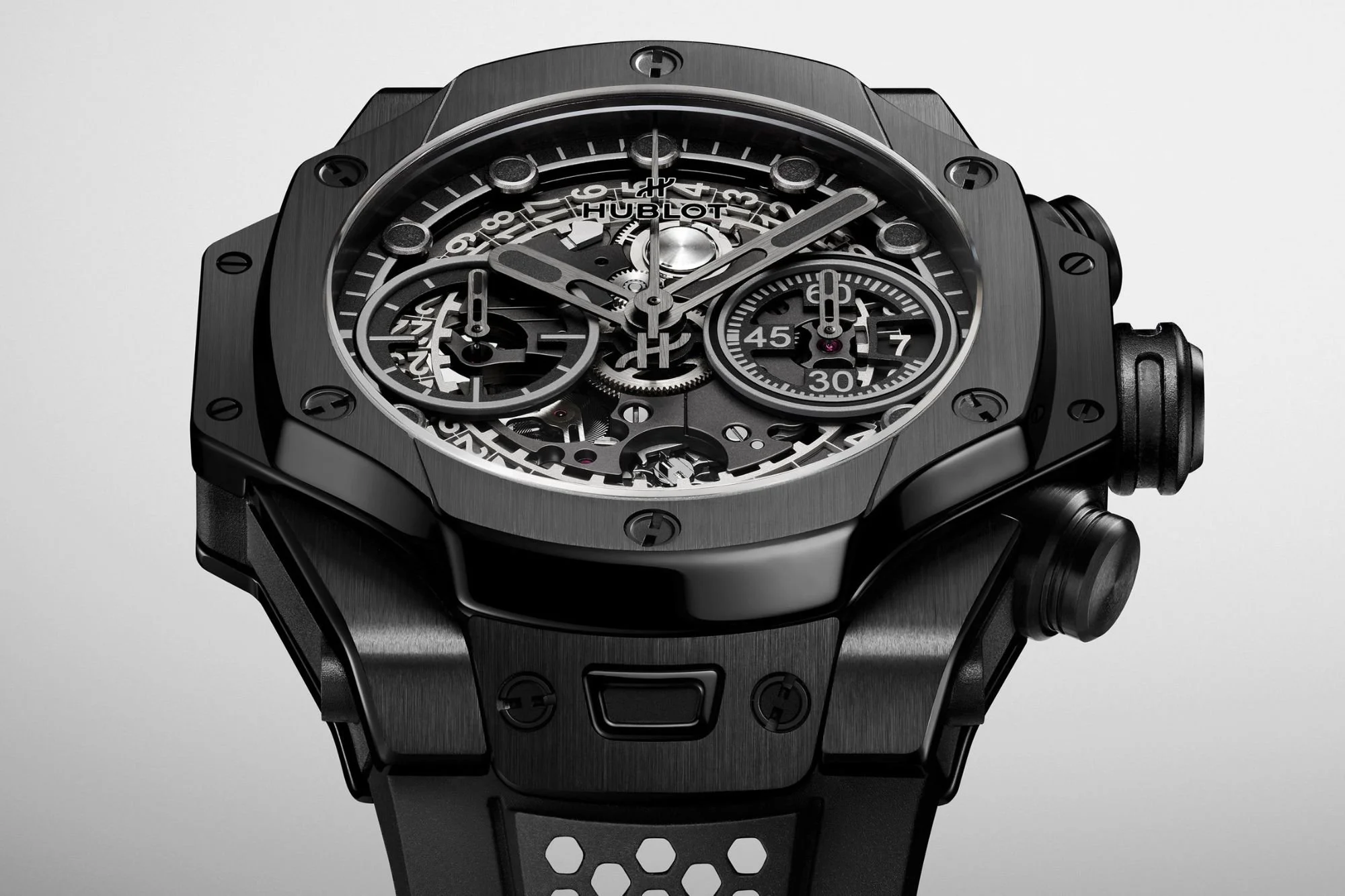
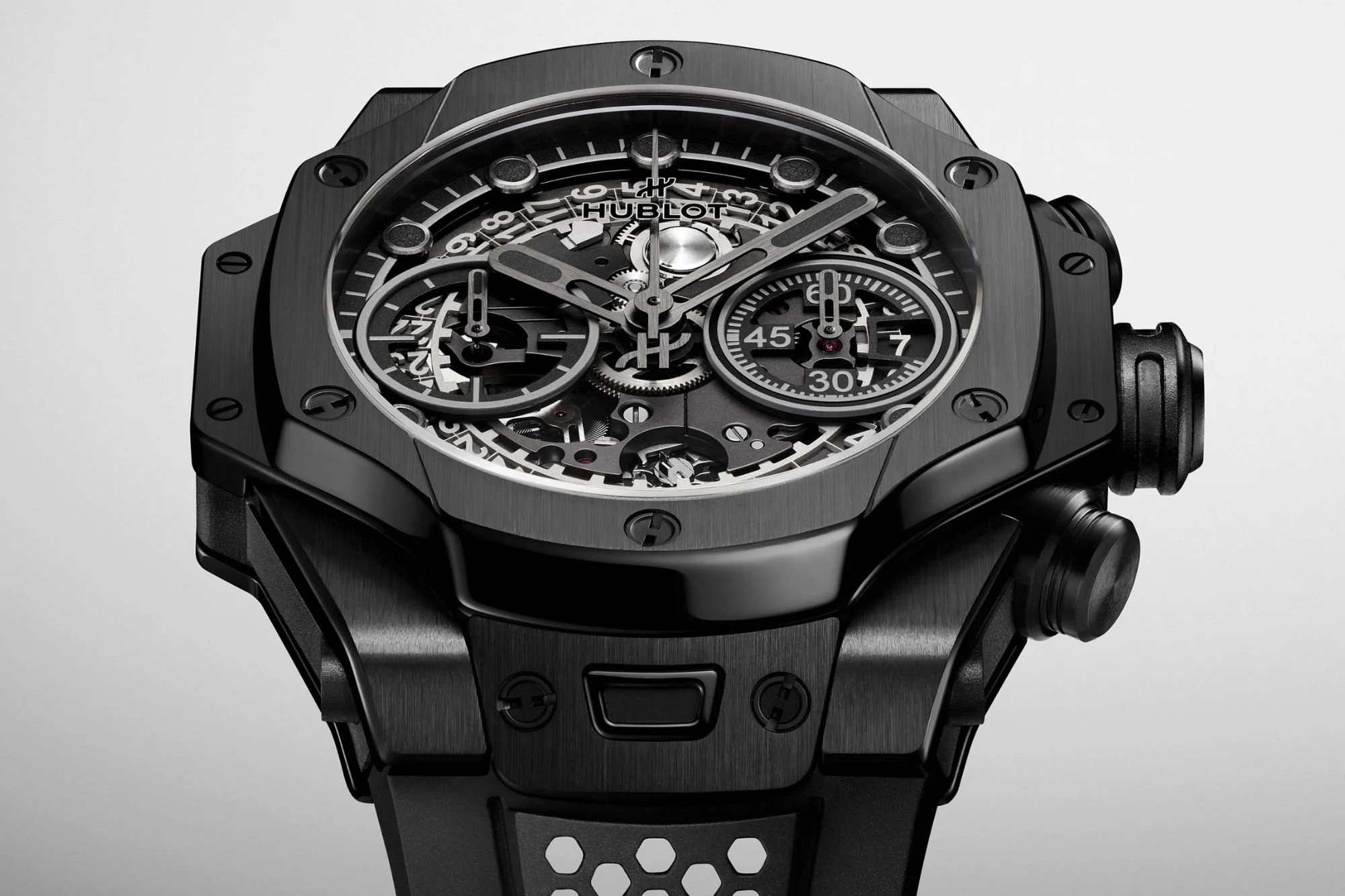
Hublot Big Bang Unico SR_A
British designer Samuel Ross adds his own conceptual layer with the Big Bang Unico SR_A, a 200-piece limited edition rooted in a monochromatic, militaristic aesthetic. While legibility takes a back seat to form, the collaboration feels true to Ross’s multidisciplinary design language drawing some inspiration from military chronographs.
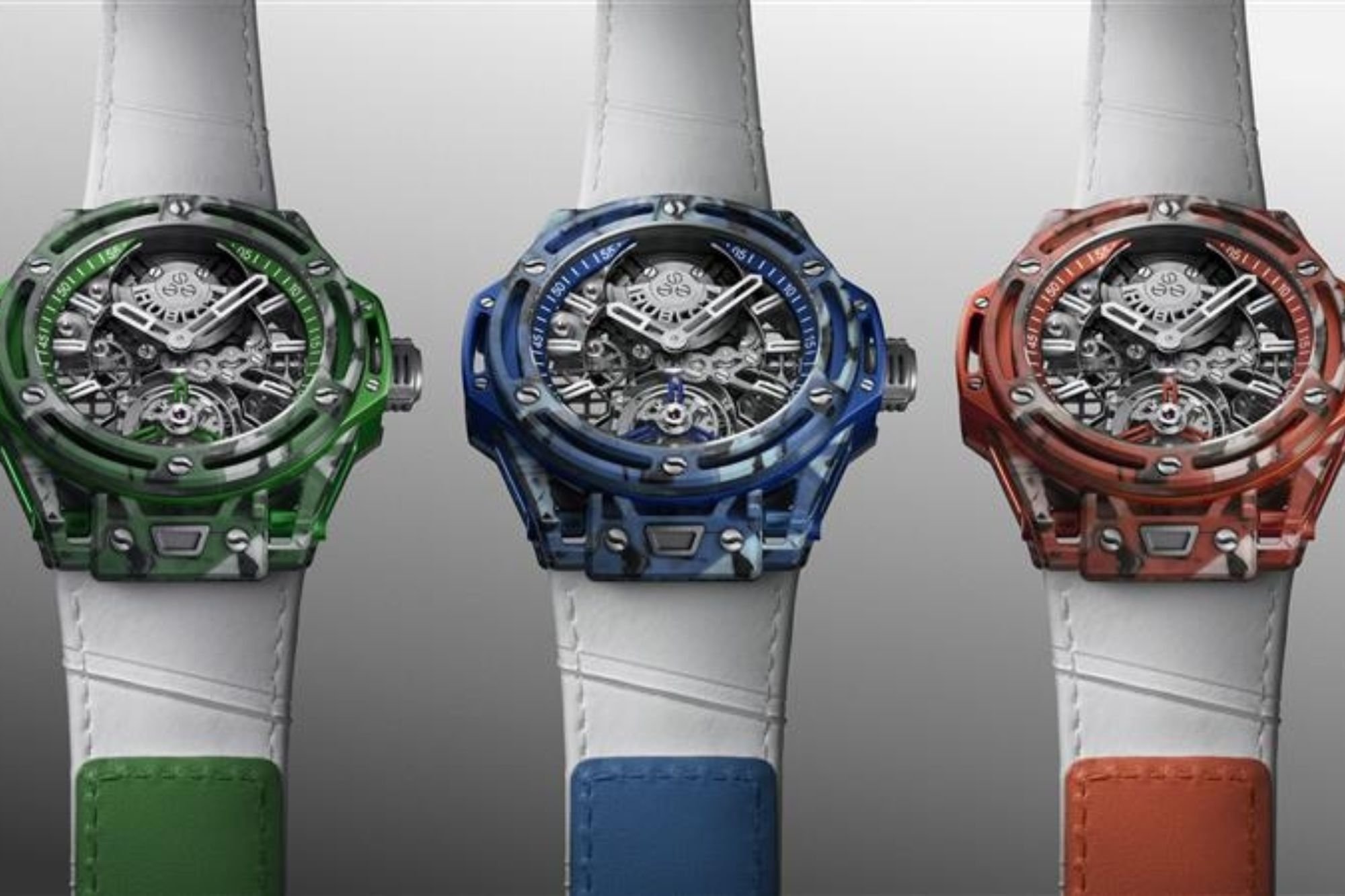
Hublot Big Bang Tourbillon Novak Djokovic “GOAT” Editions
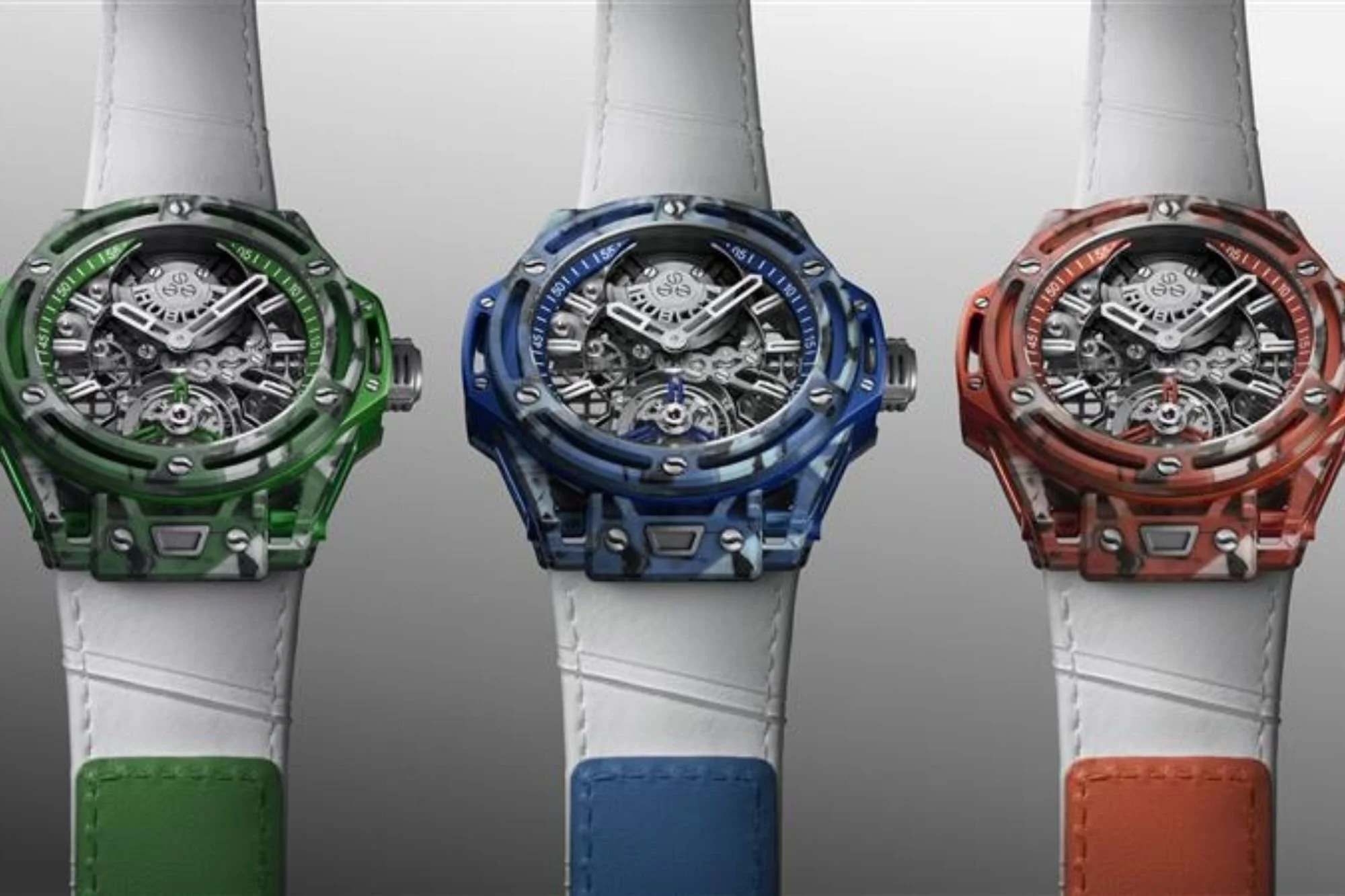
Then there’s the most Hublot release of them all: the Big Bang Tourbillon Novak Djokovic “GOAT” Editions. Rather than a traditional numbered run, production is tied directly to Djokovic’s career wins across different playing surfaces — win more, make more. The cases are crafted from a lightweight composite derived from recycled Lacoste polos and tennis rackets, while .55mm filaments are strung through the movement itself, replacing the traditional mainplate with a lattice structure that mimics a tennis racket’s strings. A bright yellow tennis ball motif behind the barrel assembly seals the concept.
Equal parts playful, excessive, and technically ambitious, it’s a reminder that — for better or worse — no one else in the industry occupies quite the same space as Hublot.
Closing Thoughts
In the moment, LVMH Watch Week can feel overwhelming — a flood of launches, headlines, and social posts that blur together before the next release cycle begins. With a bit of distance, the picture becomes clearer. This year’s showing suggests a group increasingly comfortable balancing algorithm-friendly spectacle with genuinely considered watchmaking, sometimes within the same brand, and occasionally within the same watch.
Notably absent from this first pass are Gérald Genta, Bvlgari, Daniel Roth, Louis Vuitton, and Tiffany & Co. — brands that, despite quieter coverage, brought some of the week’s most technically and creatively ambitious work. That gap will be addressed in a forthcoming second installment.
If LVMH Watch Week is evolving from a warm-up act into a true opening chapter for the year ahead, then 2026 demonstrated a group confident enough to set its own tempo. Whether that rhythm will hold once Watches and Wonders takes center stage remains the more interesting question — and one the industry will be quick to answer.